Introduction
The monsoon season brings much-needed relief from the summer heat, but it also marks the beginning of seasonal illnesses among children. Fever, cough, cold, stomach infections, and mosquito-borne diseases become more common during this time. A child who is active and playful in the morning may suddenly develop a high fever by evening, leaving parents wondering whether it is just a viral infection or a sign of something more serious.
While most monsoon fevers are mild and improve with proper care, some may indicate illnesses such as dengue, malaria, typhoid, or respiratory infections that require timely medical attention. Recognising the warning signs and seeking early medical care can help prevent complications and ensure a faster recovery.
At Kolekar Hospital, Chembur, our Paediatrics Department provides comprehensive care for children with seasonal illnesses through advanced diagnostics and personalised treatment plans.
Why Are Children More Prone to Fever During the Monsoon?
Children are more susceptible to infections because their immune systems are still developing. During the rainy season, increased humidity, stagnant water, contaminated food and water, and sudden weather changes create favourable conditions for viruses, bacteria, and mosquitoes to spread.
Schools, playgrounds, and crowded indoor spaces also increase the risk of infections passing from one child to another. Although fever is a natural response to infection, persistent or high fever should always be evaluated by a doctor to identify the underlying cause.
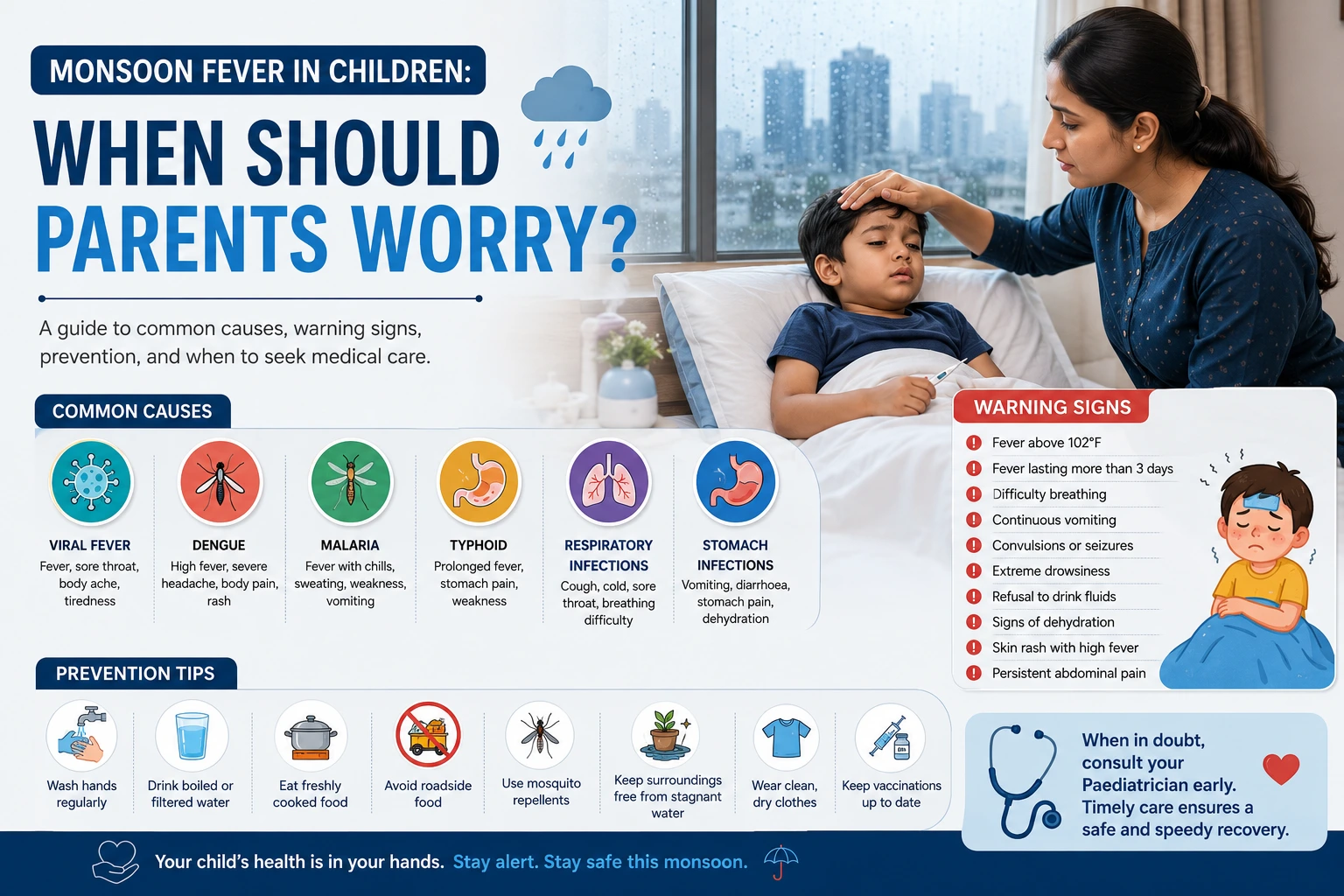
Common Causes of Monsoon Fever in Children
Viral Fever
Viral fever is one of the most common causes of fever during the monsoon.
Common symptoms include:
- Fever
- Sore throat
- Headache
- Body aches
- Fatigue
- Poor appetite
Most children recover within three to five days with adequate rest, hydration, and medicines prescribed by a doctor.
Dengue
Dengue is a mosquito-borne illness that becomes more common during the rainy season due to stagnant water.
Warning signs include:
- High fever
- Severe headache
- Body and joint pain
- Skin rash
- Nausea or vomiting
Early diagnosis is important to monitor platelet levels and prevent complications.
Malaria
Malaria is another mosquito-borne disease that requires early diagnosis and treatment.
Symptoms may include:
- Fever with chills
- Excessive sweating
- Weakness
- Vomiting
- Body pain
Prompt treatment helps reduce the risk of serious complications.
Typhoid
Typhoid spreads through contaminated food and drinking water, making it more common during the monsoon.
Symptoms include:
- Persistent fever
- Abdominal pain
- Weakness
- Poor appetite
- Vomiting
Maintaining food and water hygiene can help prevent infection.
Respiratory Infections
Respiratory illnesses such as the common cold, sore throat, bronchitis, and pneumonia become more common during the rainy season. Children with asthma may also experience worsening symptoms due to increased humidity.
Symptoms include:
- Persistent cough
- Wheezing
- Difficulty breathing
- Chest congestion
- Sore throat
Stomach Infections
Contaminated food and water can cause stomach infections, especially in younger children.
Common symptoms include:
- Vomiting
- Diarrhoea
- Stomach pain
- Fever
- Dehydration
Children who show signs of dehydration or are unable to drink fluids should receive immediate medical attention.
Symptoms Parents Should Never Ignore
Although many viral fevers settle within a few days, some symptoms require urgent medical evaluation.
Seek immediate medical attention if your child has:
- Fever above 102°F
- Fever lasting more than three days
- Difficulty breathing
- Continuous vomiting
- Convulsions or seizures
- Skin rash with high fever
- Extreme drowsiness or difficulty waking up
- Refusal to drink fluids
- Reduced urination
- Signs of dehydration
- Persistent abdominal pain
Ignoring these warning signs may delay treatment and increase the risk of complications.
When Should Parents Take Their Child to a Hospital?
While mild viral fever can often be managed at home under medical guidance, certain situations require immediate hospital care.
Visit a hospital immediately if:
- Your baby is younger than three months and develops a fever.
- The fever does not improve despite medication.
- Your child becomes unusually sleepy or difficult to wake.
- Breathing becomes fast or difficult.
- There are repeated episodes of vomiting or diarrhoea.
- Your child experiences seizures or loss of consciousness.
- You suspect dengue, malaria, or typhoid.
The Paediatrics Department at Kolekar Hospital, Chembur, provides timely diagnosis and treatment for seasonal childhood illnesses to help children recover safely.
How Is Monsoon Fever Diagnosed?
Since every fever has a different cause, identifying the underlying illness is essential before starting treatment.
Depending on your child’s symptoms, the doctor may recommend:
- Physical examination
- Complete Blood Count (CBC)
- Dengue NS1 Antigen Test
- Malaria Test
- Typhoid Test
- Urine Examination
- Chest X-ray (if a respiratory infection is suspected)
Our Paediatrics Department works closely with the Diagnostic Services team to ensure accurate diagnosis and timely treatment.
How Is Monsoon Fever Treated?
Treatment depends on the underlying cause of the fever.
Children with viral fever usually recover with:
- Adequate rest
- Plenty of fluids
- Fever-reducing medicines prescribed by the doctor
- Nutritious food
Dengue requires careful monitoring of hydration and platelet counts, while malaria and typhoid require specific medications based on the diagnosis.
Parents should never give antibiotics without consulting a doctor, as they are ineffective against viral infections.
Can Monsoon Fever in Children Be Prevented?
Although not every infection can be prevented, following simple precautions can significantly reduce your child’s risk of illness.
Prevention Tips
- Encourage regular hand washing.
- Give boiled or filtered drinking water.
- Serve freshly cooked meals.
- Avoid roadside food.
- Use mosquito repellents and mosquito nets.
- Prevent stagnant water around your home.
- Dress children in clean, dry clothes.
- Ensure routine vaccinations are up to date.
- Encourage a balanced diet and adequate sleep to strengthen immunity.
Good hygiene and early medical care remain the best defence against seasonal illnesses.
Frequently Asked Questions
Is fever common in children during the monsoon?
Yes. Viral infections, dengue, malaria, respiratory illnesses, and stomach infections make fever one of the most common health problems during the rainy season.
Can viral fever turn into dengue?
No. Viral fever and dengue are different illnesses. However, their early symptoms can be similar, so proper medical evaluation is important.
When should I take my child to the hospital for fever?
Seek immediate medical attention if your child has a high fever lasting more than three days, difficulty breathing, repeated vomiting, seizures, dehydration, or unusual drowsiness.
Can I give antibiotics without consulting a doctor?
No. Antibiotics should only be given if prescribed by a qualified doctor after determining the cause of the infection.
How long does viral fever usually last?
Most viral fevers improve within 3–5 days with proper rest, hydration, and supportive treatment. If symptoms persist or worsen, consult a paediatrician.
Conclusion
Monsoon fever in children is common, but it should never be ignored. While many cases are caused by viral infections, others may be linked to dengue, malaria, typhoid, or respiratory illnesses that require prompt medical attention. Recognising warning signs and consulting a paediatrician early can help your child recover faster and avoid serious complications.
Get Expert Paediatric Care at Kolekar Hospital
If your child develops a fever during the monsoon, don’t rely solely on home remedies or over-the-counter medicines. The Paediatrics Department at Kolekar Hospital, Chembur, offers comprehensive evaluation, advanced diagnostic support, and personalised treatment for viral fever, dengue, malaria, typhoid, respiratory infections, and other seasonal illnesses.
Book your appointment today and give your child the expert care they deserve for a safe and speedy recovery.