
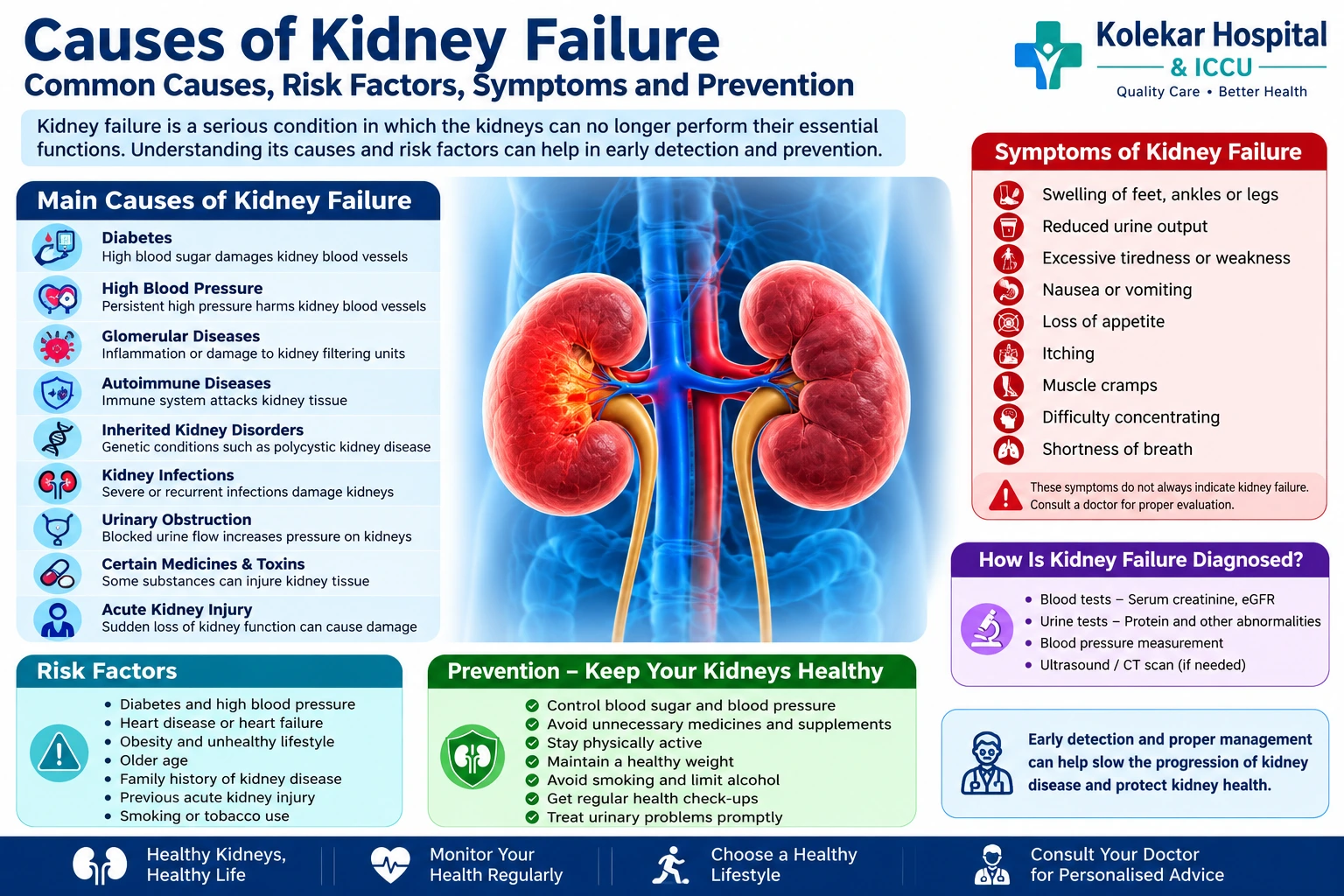
Kidney failure is a serious medical condition in which the kidneys can no longer perform their essential functions adequately. Healthy kidneys filter waste products and excess fluid from the blood, maintain the body’s electrolyte and mineral balance, help regulate blood pressure, support red blood cell production and contribute to healthy bones.
Kidney failure can develop gradually over several years because of chronic kidney disease, or it can occur suddenly as a result of acute kidney injury. Understanding the causes of kidney failure is important because many of the conditions that damage the kidneys can be detected and managed before permanent kidney damage occurs.
The two most common causes of chronic kidney disease and kidney failure are diabetes and high blood pressure. However, several other conditions, including autoimmune diseases, inherited kidney disorders, infections, urinary tract obstruction, certain medications and toxins, can also cause progressive kidney damage.
What Is Kidney Failure?
Kidney failure occurs when kidney function becomes severely reduced and the kidneys are unable to adequately remove waste, control fluid levels and maintain the body’s internal chemical balance.
Kidney failure may develop through:
- Chronic kidney disease (CKD): A gradual decline in kidney function over months or years.
- Acute kidney injury (AKI): A sudden decrease in kidney function that can occur over hours or days.
- Acute kidney injury on chronic kidney disease: A sudden deterioration in someone who already has chronic kidney damage.
Kidney failure is generally associated with kidney function falling to a very low level. The National Institute of Diabetes and Digestive and Kidney Diseases (NIDDK) describes kidney failure as kidney function below approximately 15% of normal.
When kidney function becomes severely impaired, waste products and excess fluid can accumulate in the body. Depending on the severity and cause, treatment may include medicines, dietary changes, dialysis or kidney transplantation.
What Are the Main Causes of Kidney Failure?
The causes of kidney failure can be broadly divided into diseases that gradually damage the kidneys and conditions that cause sudden kidney injury.
| Cause | How It Can Damage the Kidneys |
| Diabetes | High blood sugar can damage kidney blood vessels and filtering units |
| High blood pressure | Persistent pressure damages kidney blood vessels and filtration structures |
| Glomerular diseases | Inflammation or damage affects the kidney’s filtering units |
| Autoimmune diseases | The immune system can attack kidney tissue |
| Polycystic kidney disease | Genetic cysts progressively damage normal kidney tissue |
| Kidney infections | Severe or recurrent infections may cause kidney damage |
| Urinary obstruction | Blocked urine flow can increase pressure and damage the kidneys |
| Kidney stones | Repeated obstruction or complications can affect kidney function |
| Certain medicines and toxins | Some substances can directly injure kidney tissue |
| Acute kidney injury | Sudden loss of kidney function can sometimes result in permanent damage |
1. Diabetes Is a Major Cause of Kidney Failure
Diabetes is one of the most important causes of chronic kidney disease and kidney failure. Persistently high blood glucose can damage the small blood vessels and filtering structures within the kidneys.
The kidneys contain millions of microscopic filtering units called nephrons. Over time, elevated blood sugar can damage these structures, allowing proteins such as albumin to leak into the urine while reducing the kidneys’ ability to filter waste effectively.
This condition is commonly referred to as diabetic kidney disease.
People with diabetes may not experience obvious kidney symptoms in the early stages. This makes regular monitoring particularly important.
Diabetes-related kidney damage can be reduced by:
- Maintaining blood glucose within the target range recommended by a doctor
- Monitoring blood pressure
- Taking prescribed medicines consistently
- Getting regular kidney function and urine tests
- Following an appropriate diet
- Maintaining a healthy weight
- Avoiding tobacco products
Early detection is important because kidney damage may progress silently before noticeable symptoms develop.
2. High Blood Pressure and Kidney Failure
High blood pressure, or hypertension, is another leading cause of kidney damage.
Blood vessels inside the kidneys are delicate and designed to filter large volumes of blood. Persistently elevated blood pressure can damage these blood vessels and impair the kidney’s filtration system. As kidney function declines, the kidneys may also become less effective at controlling blood pressure, creating a cycle in which hypertension and kidney disease can worsen each other.
Uncontrolled hypertension over many years can therefore contribute to chronic kidney disease and eventually kidney failure.
People with high blood pressure should follow their doctor’s recommendations regarding:
- Regular blood pressure monitoring
- Prescribed antihypertensive medicines
- Limiting excessive salt intake
- Maintaining a healthy weight
- Regular physical activity
- Managing diabetes and cholesterol
- Avoiding smoking
3. Glomerular Diseases
The glomeruli are tiny filtering structures within the kidneys. Diseases that damage these structures are collectively known as glomerular diseases.
Examples include:
- Glomerulonephritis
- IgA nephropathy
- Membranous nephropathy
- Focal segmental glomerulosclerosis
- IgA vasculitis
Inflammation or structural damage to the glomeruli can cause blood or protein to appear in the urine and gradually reduce kidney function. Some glomerular diseases develop because of immune-system abnormalities, while others may be associated with infections or other medical conditions.
If left untreated or if severe, some of these conditions can progress to advanced kidney disease.
4. Autoimmune Diseases
Autoimmune diseases can also be among the causes of kidney failure.
In autoimmune disorders, the immune system mistakenly attacks the body’s own tissues. One important example is lupus nephritis, in which systemic lupus erythematosus affects the kidneys.
Other immune-mediated diseases can also affect the kidney’s filtering structures.
Patients with autoimmune disease may require regular monitoring of:
- Blood pressure
- Serum creatinine and estimated glomerular filtration rate (eGFR)
- Urine protein
- Urine blood
- Other disease-specific markers
Early treatment of kidney involvement may help slow the progression of kidney damage.
5. Polycystic Kidney Disease and Other Inherited Conditions
Some kidney diseases are caused by genetic changes that can be inherited within families.
Polycystic kidney disease (PKD) is one of the better-known inherited kidney disorders. It causes multiple cysts to develop in the kidneys. Over time, these cysts can enlarge and interfere with normal kidney tissue.
Other inherited disorders can also impair kidney function.
A family history of kidney disease or kidney failure can increase a person’s risk. People with a strong family history should discuss appropriate screening with a healthcare professional.
6. Kidney Infections and Recurrent Urinary Tract Infections
A urinary tract infection (UTI) usually affects the bladder or lower urinary tract. However, an infection can sometimes spread to the kidneys and cause pyelonephritis, or kidney infection.
Repeated, severe or inadequately treated kidney infections can potentially cause scarring and long-term kidney damage.
The risk can be particularly important in people who have:
- Urinary tract abnormalities
- Kidney stones
- Urinary obstruction
- Conditions affecting bladder emptying
- Recurrent infections
Persistent symptoms such as fever, chills, painful urination or pain in the side or back should be medically evaluated rather than repeatedly self-treated.
7. Kidney Stones and Urinary Tract Obstruction
Kidney stones can sometimes block the normal flow of urine. Other causes of urinary obstruction include:
- Enlarged prostate
- Tumours
- Ureteral narrowing or scarring
- Congenital urinary tract abnormalities
- Severe urinary retention
- Large or obstructing stones
When urine cannot flow normally, pressure can build up within the urinary system. Prolonged obstruction can damage the kidneys and may contribute to loss of kidney function.
This is why persistent urinary difficulty, reduced urine output or recurrent urinary obstruction should not be ignored.
8. Acute Kidney Injury
Not all kidney failure develops slowly. Acute kidney injury (AKI) is a sudden reduction in kidney function that can develop over a short period.
AKI may occur because of:
- Severe dehydration
- Major blood loss
- Very low blood pressure
- Severe infections or sepsis
- Certain medicines
- Exposure to kidney-toxic substances
- Severe illness
- Urinary obstruction
- Major surgery or trauma
NIDDK notes that AKI can result from conditions such as sepsis, decreased blood pressure and kidney injury caused by drugs or toxins.
Some people recover substantially after AKI, particularly when the underlying cause is identified and treated promptly. However, severe AKI can sometimes result in persistent kidney damage or increase the risk of developing chronic kidney disease.
9. Certain Medicines and Toxic Substances
Some medicines can affect kidney function, particularly when used inappropriately, at excessive doses or in people who already have kidney problems.
Examples may include certain:
- Pain-relieving medicines
- Antibiotics
- Chemotherapy medicines
- Other medicines that can be nephrotoxic in particular circumstances
The National Kidney Foundation also identifies excessive use of non-steroidal anti-inflammatory drugs (NSAIDs), certain drugs, contrast substances and environmental toxins among potential contributors to kidney damage.
This does not mean patients should stop prescribed medicines on their own. Instead, people with kidney disease should tell their doctor about all prescription medicines, over-the-counter medicines and supplements they use.
10. Severe Infections and Other Serious Medical Conditions
Severe systemic infections can cause widespread inflammation, low blood pressure and reduced blood flow to the kidneys. This may result in acute kidney injury.
Conditions such as haemolytic uremic syndrome (HUS) and thrombotic thrombocytopenic purpura (TTP) can also affect kidney function. Certain cancers and blood-related conditions, including multiple myeloma, may contribute to chronic kidney disease in some patients.
These conditions require specialised medical evaluation because the appropriate treatment depends on the underlying cause.
Risk Factors That Can Increase the Chance of Kidney Failure
Having a risk factor does not necessarily mean that a person will develop kidney failure. However, several factors can increase the likelihood of kidney disease.
Common risk factors include:
- Diabetes
- High blood pressure
- Heart disease or heart failure
- Obesity
- Older age
- Family history of kidney disease or kidney failure
- Previous acute kidney injury
- Smoking or tobacco use
- Certain inherited disorders
- Recurrent urinary tract problems
- Long-term exposure to kidney-toxic medicines or substances
Diabetes and hypertension remain the most important common causes of chronic kidney disease.
What Are the Symptoms of Kidney Failure?
Kidney disease can be difficult to recognise in its early stages because symptoms may be absent or nonspecific.
As kidney function becomes severely impaired, symptoms may include:
- Swelling of the feet, ankles or legs
- Reduced urine output
- Excessive tiredness or weakness
- Nausea or vomiting
- Loss of appetite
- Itching
- Muscle cramps
- Difficulty concentrating
- Sleep problems
- Shortness of breath
- Changes in urination
These symptoms do not necessarily mean that a person has kidney failure. They can occur with several other medical conditions, so proper evaluation is important.
How Is Kidney Failure Diagnosed?
Doctors use a combination of medical history, physical examination, blood tests, urine tests and, when required, imaging studies.
Common investigations include:
| Test | What It Helps Assess |
| Serum creatinine | Kidney filtration and overall kidney function |
| eGFR | Estimated level of kidney filtration |
| Urine albumin-creatinine ratio | Protein leakage through the kidneys |
| Urinalysis | Blood, protein and other abnormalities in urine |
| Blood pressure measurement | Identifies an important kidney disease risk factor |
| Ultrasound/CT or other imaging | May identify obstruction, stones or structural abnormalities |
The National Kidney Foundation identifies eGFR and urine albumin-creatinine ratio as important tests for assessing kidney health.
Can Kidney Failure Be Prevented?
Not every case of kidney failure can be prevented, particularly when it results from inherited or unavoidable medical conditions. However, many important risk factors can be controlled.
Steps that can support kidney health include:
- Control blood sugar: People with diabetes should follow their treatment plan and monitor glucose as recommended.
- Control blood pressure: Regular monitoring and appropriate treatment can reduce kidney damage.
- Avoid unnecessary medicines: Do not regularly take painkillers or supplements without discussing their safety with a healthcare professional.
- Stay physically active: Regular exercise supports cardiovascular and metabolic health.
- Maintain a healthy weight: Obesity is associated with increased kidney disease risk.
- Avoid smoking: Tobacco use can adversely affect blood vessels and overall kidney health.
- Get regular check-ups: People at higher risk should discuss kidney screening with their doctor.
- Treat urinary problems promptly: Recurrent infections, stones or difficulty passing urine should be evaluated.
- Follow medical advice after acute kidney injury: Previous AKI can increase the risk of future chronic kidney disease.
When Should You See a Kidney Specialist?
You should consider medical evaluation if you have persistent changes in urination, unexplained swelling, blood or protein in the urine, consistently high blood pressure, abnormal kidney function tests or a history of conditions that can damage the kidneys.
People with diabetes, hypertension, cardiovascular disease, a family history of kidney failure or previous acute kidney injury may also benefit from regular kidney function monitoring.
Early assessment is particularly important because kidney disease can progress without obvious symptoms.
Frequently Asked Questions About the Causes of Kidney Failure
What are the most common causes of kidney failure?
The two major causes are diabetes and high blood pressure. Other causes include glomerular diseases, autoimmune disorders, inherited kidney diseases, infections, urinary obstruction, kidney stones, certain medicines and acute kidney injury.
Can high blood pressure cause kidney failure?
Yes. Long-standing, poorly controlled high blood pressure can damage the blood vessels and filtering structures of the kidneys. Kidney disease can also worsen blood pressure, creating a cycle of progressive damage.
Can diabetes lead to kidney failure?
Yes. Persistently high blood sugar can damage the kidney’s filtering system. Over time, this can result in diabetic kidney disease and, in severe cases, kidney failure.
Can kidney failure happen suddenly?
Yes. A sudden decline in kidney function is called acute kidney injury. Severe dehydration, low blood pressure, sepsis, certain medicines, toxins and urinary obstruction are among the potential causes.
Can kidney failure be reversed?
It depends on the cause. Some cases of acute kidney injury can improve substantially when the underlying problem is treated promptly. Advanced chronic kidney failure generally represents permanent loss of kidney function and may require long-term kidney replacement treatment such as dialysis or transplantation.
Can kidney failure occur without symptoms?
Yes. Chronic kidney disease can remain unnoticed for a long time. This is one reason why people with diabetes, high blood pressure and other risk factors should undergo appropriate kidney health checks.
Conclusion
Understanding the causes of kidney failure is an important part of protecting long-term kidney health. Diabetes and high blood pressure are the leading causes, but kidney failure can also result from glomerular diseases, autoimmune conditions, inherited disorders, infections, urinary obstruction, kidney stones, certain medications and acute kidney injury.
Because kidney disease can progress silently, early detection is essential. Regular monitoring of blood pressure, blood sugar, kidney function and urine abnormalities can help identify problems before significant kidney damage occurs.
If you have diabetes, hypertension, recurrent urinary problems, a family history of kidney disease or abnormal kidney test results, speak with a qualified healthcare professional about appropriate evaluation and follow-up.
Kolekar Hospital provides comprehensive medical care and evaluation for patients with kidney and other health concerns. Timely medical assessment can help identify the underlying cause of kidney problems and guide appropriate treatment.
Contact Details:
Kolekar Hospital & ICCU
| Multispeciality Hospital in Chembur |
Address: 2nd Floor, Omprakash Arcade, Approach to Ambedkar Garden Bus Stop Chembur Gaothan, Chembur 2nd & 3rd floor Omprakash Arcade, at Ambedkar garden, Chembur, Mumbai, Maharashtra 400071
Phone: 02235083100
Website: kolekarhospital.com