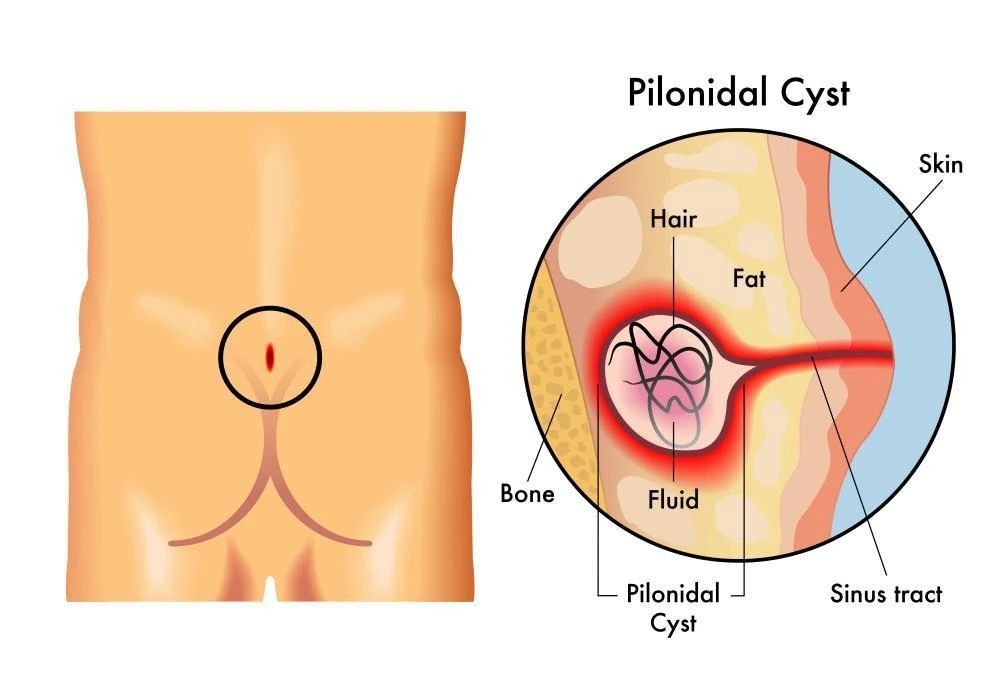
A pilonidal sinus is a small opening, tunnel or cavity that usually develops in the skin at the top of the buttock crease, close to the tailbone. It may contain trapped hair, skin debris and inflammatory tissue. Many people have a pilonidal sinus without experiencing any symptoms, while others develop pain, swelling, pus-filled abscesses or repeated infections.
So, is pilonidal sinus dangerous? In most cases, a pilonidal sinus is not life-threatening, particularly when it is small and does not cause symptoms. However, an infected or repeatedly recurring pilonidal sinus should not be ignored. It can cause significant pain, abscess formation, persistent discharge and recurrent infections. Rarely, very long-standing, chronically inflamed pilonidal disease has been associated with squamous cell carcinoma, a type of skin cancer.
Understanding the symptoms, possible complications and appropriate treatment can help prevent the condition from becoming more troublesome.
What Is a Pilonidal Sinus?
A pilonidal sinus is a small tract or opening in the skin, usually located in the cleft between the buttocks. The condition is closely associated with ingrown or embedded hair.
When loose hair becomes trapped in the skin, friction and pressure can push the hair deeper into the tissue. The body’s inflammatory response may then create a small cavity around it. Over time, this can develop into a sinus tract that may become infected.
A pilonidal sinus may exist in different forms:
| Type | What it means | Common symptoms |
| Asymptomatic sinus | Sinus without active infection or significant symptoms | Usually none |
| Acute infection | Sudden infection with abscess formation | Pain, swelling, redness, pus |
| Chronic pilonidal sinus | Persistent or repeatedly infected sinus | Recurrent discharge, discomfort, bleeding |
| Recurrent disease | Sinus returns after previous treatment | Repeated swelling, pain or drainage |
An asymptomatic pilonidal sinus often does not require immediate treatment, while symptomatic disease may require medical or surgical management.
Is Pilonidal Sinus Dangerous or Serious?
For most people, a pilonidal sinus itself is not dangerous. The main concern is infection and recurrence.
A sinus can remain quiet for a long time and then suddenly become infected. An abscess may develop, causing considerable pain and making sitting, walking or normal daily activities uncomfortable.
The condition becomes more concerning when:
- The sinus repeatedly becomes infected.
- A painful abscess develops.
- Pus or blood continues to drain.
- The infection spreads into surrounding skin.
- Symptoms continue despite previous treatment.
- The condition interferes with sitting, working or everyday activities.
- The sinus has been present with repeated inflammation for many years.
Acute pilonidal abscesses generally require drainage rather than simply waiting for the infection to resolve. Current colorectal guidelines recommend incision and drainage for an acute abscess.
What Are the Symptoms of a Pilonidal Sinus?
A pilonidal sinus may not cause symptoms until it becomes inflamed or infected.
Common symptoms include:
- A small pit or opening at the top of the buttock crease
- Pain or tenderness near the tailbone
- Redness or swelling
- A painful lump
- Pus or blood coming from the opening
- Foul-smelling discharge
- Difficulty sitting comfortably
- Recurrent swelling in the same area
- Skin irritation around the sinus
An infected pilonidal sinus can sometimes develop quickly over several days. A painful, swollen lump that begins draining pus or blood is a reason to seek medical assessment.
What Happens If a Pilonidal Sinus Gets Infected?
When bacteria enter a pilonidal sinus, an infection can develop. Pus may accumulate inside the cavity, creating a pilonidal abscess.
An abscess can cause:
- Increasing pain and tenderness
- Redness and swelling
- A warm or firm lump
- Pus formation
- Difficulty sitting
- Occasionally, fever or feeling generally unwell
An abscess usually does not resolve simply by taking painkillers. Medical treatment may be necessary to drain the accumulated pus. Guidelines recommend incision and drainage as the main treatment for an acute pilonidal abscess.
Can Pilonidal Sinus Cause Complications?
Most cases can be successfully managed, but untreated or recurrent pilonidal disease can cause ongoing problems.
1. Recurrent Abscesses
One of the most common complications is repeated abscess formation. After an abscess is drained, the underlying sinus tract may remain, allowing another infection to occur.
Research-based guidelines note that simple drainage can be followed by recurrence because the underlying sinus tracts, debris and inflammatory tissue may remain.
2. Chronic Pain and Discomfort
A chronically inflamed sinus can cause persistent tenderness, especially when sitting for prolonged periods. This can interfere with work, travel, exercise and daily activities.
3. Persistent Pus or Blood Discharge
Some people with chronic pilonidal disease experience intermittent drainage from the sinus. The discharge may contain pus or blood and can sometimes have an unpleasant smell.
4. Repeated Infections
Repeated episodes of infection can create a cycle of swelling, drainage and healing followed by another flare-up.
If the condition keeps returning, a doctor may recommend definitive treatment rather than repeatedly treating each infection as a separate episode.
5. Rare Skin Cancer
Long-standing, chronically inflamed pilonidal disease has rarely been associated with squamous cell carcinoma. This complication is uncommon, but it is one reason persistent, neglected or repeatedly changing lesions should be assessed by a medical professional.
Can Pilonidal Sinus Become Life-Threatening?
Usually, no. Most pilonidal sinuses are localized skin conditions and can be effectively treated.
However, an untreated infection should not be taken lightly. Any significant skin infection can potentially become more extensive, particularly in people with factors that affect healing or immunity.
Seek prompt medical attention if you develop:
- Rapidly increasing pain or swelling
- A large or very painful lump
- Pus or significant bleeding
- Spreading redness around the affected area
- Fever or chills
- Difficulty sitting or walking because of pain
- Repeated infections
- A wound that does not heal
Early assessment can help determine whether drainage, medication, wound care or definitive treatment is appropriate.
What Causes Pilonidal Sinus?
The exact cause can vary, but embedded hair is considered an important factor.
Hair can penetrate the skin around the buttock crease, particularly when there is repeated friction or pressure. The body reacts to the embedded hair, resulting in inflammation and formation of a cyst or sinus.
Factors associated with pilonidal disease include:
- Prolonged sitting
- Friction and pressure around the buttock crease
- Excess body weight
- Thick or coarse body hair
- Inactive lifestyle
- Local skin irritation
- Previous pilonidal disease
Long periods of sitting can increase pressure and friction in the area and may contribute to the development of pilonidal disease.
How Is Pilonidal Sinus Diagnosed?
Pilonidal sinus is generally diagnosed through a medical history and physical examination.
A doctor may examine the skin around the upper buttock crease to identify:
- Sinus openings or pits
- Swelling
- Redness
- Abscess formation
- Discharge
- Scarring
- Multiple sinus tracts
Routine blood tests or imaging are not generally required for straightforward pilonidal disease. Additional evaluation may be considered when another condition is suspected.
How Is Pilonidal Sinus Treated?
Treatment depends on whether the sinus is asymptomatic, infected, chronic or recurrent.
1. Observation for an Asymptomatic Sinus
If a pilonidal sinus is not infected and is causing no symptoms, immediate surgery is generally not recommended. Maintaining good hygiene and monitoring for symptoms may be appropriate.
2. Incision and Drainage
If an abscess develops, the priority is usually to drain the pus.
During incision and drainage, a doctor makes an opening in the abscess to allow the accumulated pus to escape. This can relieve pressure and pain and help control the acute infection.
However, drainage does not necessarily eliminate an underlying chronic sinus, which is why some patients may experience recurrence.
3. Antibiotics
Antibiotics may be considered when there is an infection, particularly when surrounding skin infection is present. However, antibiotics alone generally do not eliminate the underlying pilonidal sinus.
4. Minimally Invasive Procedures
Selected patients with limited pilonidal disease may be candidates for minimally invasive techniques, including endoscopic procedures.
These approaches aim to clean and treat the sinus through smaller openings and may be considered depending on the extent of disease and the surgeon’s expertise. Current guidelines recognize minimally invasive procedures as an option for selected patients rather than a universal treatment for every case.
5. Surgical Excision
For chronic, extensive or recurrent pilonidal disease, surgery may be recommended to remove the affected sinus and surrounding diseased tissue.
The appropriate technique depends on factors such as:
- Size and extent of the sinus
- Number of sinus openings
- Previous procedures
- Recurrence
- Presence of scarring
- Overall health
- Surgeon experience
For more extensive disease requiring excision, current European guidelines favor off-midline closure over primary midline closure because of differences in wound complications and recurrence.
Pilonidal Sinus Treatment: Quick Comparison
| Treatment | Usually considered for | Main purpose |
| Observation | Asymptomatic disease | Monitor without unnecessary intervention |
| Incision and drainage | Acute abscess | Drain pus and control acute infection |
| Antibiotics | Selected infections | Help control bacterial infection |
| Minimally invasive treatment | Selected limited or suitable disease | Treat sinus with less extensive surgery |
| Excision | Chronic or extensive disease | Remove diseased sinus tissue |
| Off-midline flap procedures | Complex or recurrent disease | Remove disease and reduce wound-related problems |
The best treatment should be selected after an examination rather than based solely on the name or size of the condition.
Can Pilonidal Sinus Go Away on Its Own?
An asymptomatic pilonidal sinus may remain quiet without causing problems. However, once symptomatic disease or an abscess develops, spontaneous permanent resolution is uncommon.
This is why repeated episodes of pain, swelling or discharge should be evaluated rather than repeatedly ignored.
How Can Pilonidal Sinus Be Prevented?
There is no guaranteed way to prevent pilonidal disease, but certain measures may help reduce irritation and recurrence.
Consider:
- Keeping the buttock crease clean and dry
- Avoiding prolonged sitting when possible
- Maintaining a healthy body weight
- Reducing friction and pressure in the area
- Following wound-care instructions after treatment
- Discussing hair-management strategies with your doctor if recurrent disease is an issue
Personalized advice is particularly important after surgery because wound care and hair management recommendations may vary depending on the procedure performed.
When Should You See a Doctor for Pilonidal Sinus?
You should arrange a medical evaluation if you notice a new lump, pit, swelling or discharge near the tailbone.
Seek prompt medical attention if the area becomes:
- Very painful
- Red or increasingly swollen
- Filled with pus
- Associated with fever or chills
- Increasingly difficult to sit on
- Repeatedly infected
Early treatment can prevent an acute abscess from becoming a recurring problem.
Frequently Asked Questions About Pilonidal Sinus
Is pilonidal sinus dangerous?
Usually, pilonidal sinus is not dangerous or life-threatening. However, an infected or recurrent sinus can cause painful abscesses, persistent drainage and repeated infections. Rarely, long-standing chronic disease has been associated with squamous cell carcinoma.
Can an infected pilonidal sinus be serious?
An infected pilonidal sinus can become very painful and may form an abscess. It should be assessed by a doctor, especially if there is significant swelling, pus, spreading redness or fever.
Does pilonidal sinus need surgery?
Not every pilonidal sinus requires surgery. An asymptomatic sinus may simply be monitored. Acute abscesses usually require drainage, while chronic or recurrent disease may require definitive surgical treatment.
Can pilonidal sinus come back after treatment?
Yes. Recurrence is possible because the underlying risk factors or sinus tracts may persist. The choice of treatment, disease extent and wound-management approach can influence recurrence.
Is pilonidal sinus cancer?
No. A pilonidal sinus is not cancer. However, very rare cases of squamous cell carcinoma have been reported in long-standing, chronically inflamed pilonidal disease.
Should I ignore a painless pilonidal sinus?
A painless, asymptomatic pilonidal sinus generally does not require preventive surgery. However, it is important to monitor the area for pain, swelling, redness or discharge and seek medical advice if symptoms develop.
Final Takeaway: Is Pilonidal Sinus Dangerous?
So, is pilonidal sinus dangerous? In most cases, it is not a dangerous or life-threatening condition, but it can become painful and troublesome when infected or repeatedly recurring.
A small, asymptomatic sinus may only require observation, while an acute abscess generally needs drainage. Chronic or recurrent disease may require a definitive procedure to address the underlying sinus. Modern treatment options range from drainage and minimally invasive procedures to surgical excision, depending on the individual patient’s condition.
If you have persistent pain, swelling, pus, bleeding or a recurring lump near your tailbone, do not ignore the symptoms. A consultation with a qualified surgeon can help determine the cause and the most appropriate treatment.
This article is intended for general health information and does not replace an individual medical consultation.