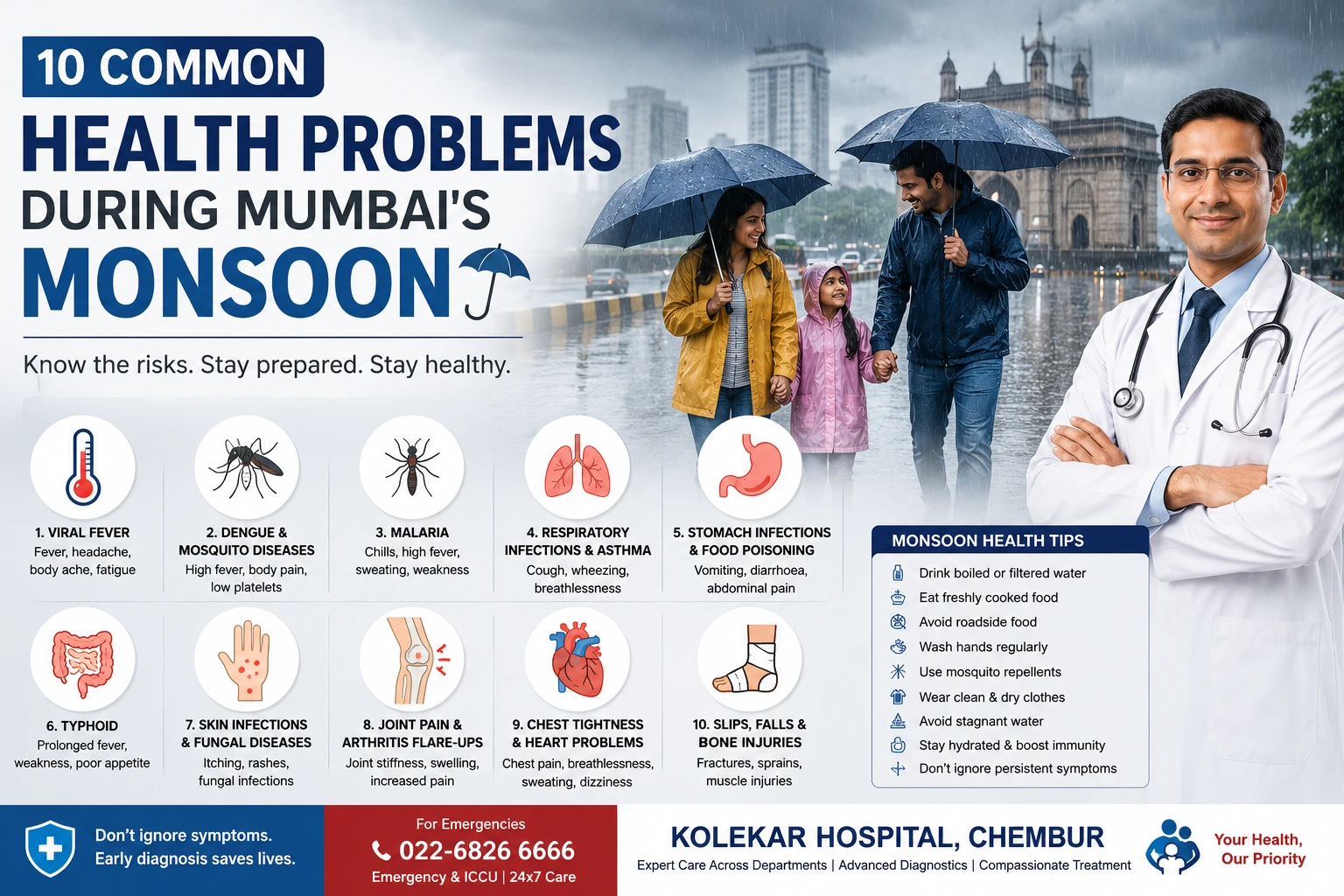
Mumbai’s monsoon brings much-needed relief from the scorching summer heat, but it also creates conditions that increase the risk of several health problems. Heavy rainfall, waterlogging, high humidity, and stagnant water encourage the spread of infections, mosquito-borne diseases, and respiratory illnesses.
While many seasonal illnesses begin with mild symptoms, delaying medical attention can lead to serious complications. Knowing the warning signs and taking preventive measures can help you and your family stay healthy throughout the rainy season.
At Kolekar Hospital, Chembur, our team of experienced specialists provides comprehensive diagnosis and treatment for a wide range of monsoon-related illnesses.
Why Do Health Problems Increase During the Monsoon?
The rainy season creates an environment where bacteria, viruses, fungi, and mosquitoes thrive. At the same time, fluctuations in temperature and humidity can weaken the body’s natural defence mechanisms.
Some common reasons include:
- Stagnant water leading to mosquito breeding
- Contaminated food and drinking water
- Increased humidity promoting fungal infections
- Sudden weather changes affecting immunity
- Wet and slippery roads increasing the risk of falls
Understanding these risks is the first step toward preventing seasonal illnesses.
1. Viral Fever and Seasonal Flu
Viral fever is one of the most common illnesses during Mumbai’s monsoon. The sudden change in weather makes it easier for viral infections to spread.
Symptoms
- Fever
- Body ache
- Headache
- Sore throat
- Fatigue
If your fever lasts more than two days or is accompanied by breathing difficulty, consult a doctor immediately.
2. Dengue and Other Mosquito-Borne Diseases
Water collected in containers, drains, and open spaces provides an ideal breeding ground for mosquitoes.
Symptoms
- High fever
- Severe headache
- Muscle and joint pain
- Skin rash
- Nausea
- Low platelet count
Early diagnosis and treatment can help prevent serious complications.
3. Malaria
Malaria is another common mosquito-borne disease during the rainy season. It spreads through infected mosquito bites and requires prompt medical attention.
Symptoms
- High fever with chills
- Excessive sweating
- Weakness
- Body pain
- Vomiting
Early treatment significantly reduces the risk of complications.
4. Respiratory Infections and Asthma
High humidity can worsen asthma and increase the risk of respiratory infections, particularly in children, older adults, and people with existing lung conditions.
Symptoms
- Persistent cough
- Wheezing
- Shortness of breath
- Chest tightness
Individuals with asthma should continue their prescribed medications and avoid prolonged exposure to damp environments.
5. Stomach Infections and Food Poisoning
During the monsoon, contaminated food and water become a major cause of digestive illnesses.
Symptoms
- Vomiting
- Diarrhoea
- Stomach cramps
- Fever
- Dehydration
Drink safe water and consume freshly prepared meals to reduce the risk.
6. Typhoid
Typhoid spreads through contaminated food and drinking water and is more common during the rainy season.
Symptoms
- Persistent fever
- Weakness
- Loss of appetite
- Abdominal pain
- Constipation or diarrhoea
Early medical treatment helps prevent severe complications.
7. Skin Infections and Fungal Diseases
Constant exposure to moisture, wet footwear, and damp clothing can lead to fungal and bacterial skin infections.
Common Conditions
- Ringworm
- Athlete’s foot
- Fungal rashes
- Itching and redness
Keeping your skin dry and maintaining good personal hygiene can help prevent these infections.
8. Joint Pain and Arthritis Flare-Ups
Many people experience increased joint stiffness and pain during humid weather, especially those with arthritis or previous joint injuries.
If knee pain, back pain, or joint stiffness affects your daily activities, seek medical advice.
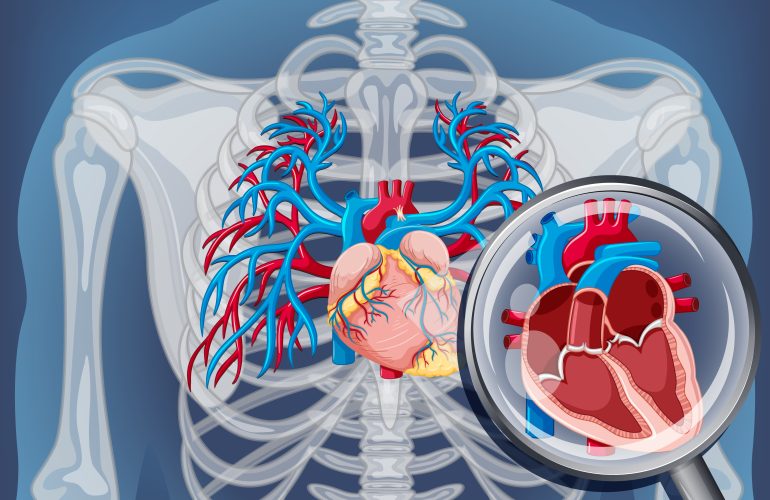
9. Chest Tightness and Heart Problems
Humidity forces the heart to work harder, making symptoms more noticeable in people with hypertension or existing heart disease.
Seek immediate medical attention if chest pain is accompanied by:
- Sweating
- Breathlessness
- Pain spreading to the arm or jaw
- Dizziness
10. Slips, Falls, and Bone Injuries
Wet roads and slippery surfaces increase the risk of fractures, sprains, and ligament injuries.
If pain, swelling, or difficulty walking persists after a fall, consult an orthopaedic specialist without delay.
How to Stay Healthy During Mumbai’s Monsoon
You can lower your risk of seasonal illnesses by following a few simple precautions:
- Drink boiled or filtered water.
- Eat freshly cooked food.
- Avoid roadside food during heavy rains.
- Wash your hands regularly.
- Use mosquito repellents.
- Wear clean and dry clothes.
- Avoid walking through stagnant water.
- Stay hydrated.
- Get enough sleep to strengthen your immunity.
- Seek medical advice if symptoms persist.
When Should You Visit a Hospital?
Consult a doctor immediately if you experience:
- Fever lasting more than 2–3 days
- Difficulty breathing
- Severe dehydration
- Persistent vomiting
- Chest pain
- Sudden weakness
- High fever with skin rash
- Severe abdominal pain
- Loss of consciousness
Prompt medical care can prevent complications and support faster recovery.
Frequently Asked Questions
Which diseases are most common during Mumbai’s monsoon?
Viral fever, dengue, malaria, typhoid, respiratory infections, stomach infections, fungal skin infections, and joint pain are among the most common health problems.
Why do heart problems worsen during humid weather?
High humidity increases the workload on the heart, making symptoms more noticeable in people with existing cardiovascular conditions.
How can I prevent monsoon illnesses?
Maintain good hygiene, drink safe water, eat freshly prepared food, use mosquito repellents, and seek medical care if symptoms persist.
When should I visit the emergency department?
Visit immediately if you experience severe chest pain, breathing difficulty, persistent high fever, dehydration, or loss of consciousness.
Which department should I consult first?
If you are unsure about the cause of your symptoms, consult the General Medicine Department, where doctors can evaluate your condition and refer you to the appropriate specialist if needed.
Conclusion
The monsoon season in Mumbai increases the risk of infections, mosquito-borne diseases, respiratory illnesses, digestive disorders, heart-related symptoms, and accidental injuries. While many of these conditions are manageable with early treatment, ignoring symptoms can lead to serious complications.
Recognising the warning signs, following preventive measures, and seeking timely medical care can help you and your family stay healthy throughout the rainy season.
Stay Healthy This Monsoon with Kolekar Hospital
Whether you’re experiencing viral fever, dengue, stomach infections, breathing difficulties, chest pain, or bone injuries, the experienced specialists at Kolekar Hospital, Chembur, are here to help.
With advanced diagnostic facilities and expert care across General Medicine, Cardiology, Gastroenterology, Pulmonology, Orthopaedics, and Emergency & ICCU, we provide comprehensive treatment under one roof.
Book your consultation today and stay protected this monsoon.