
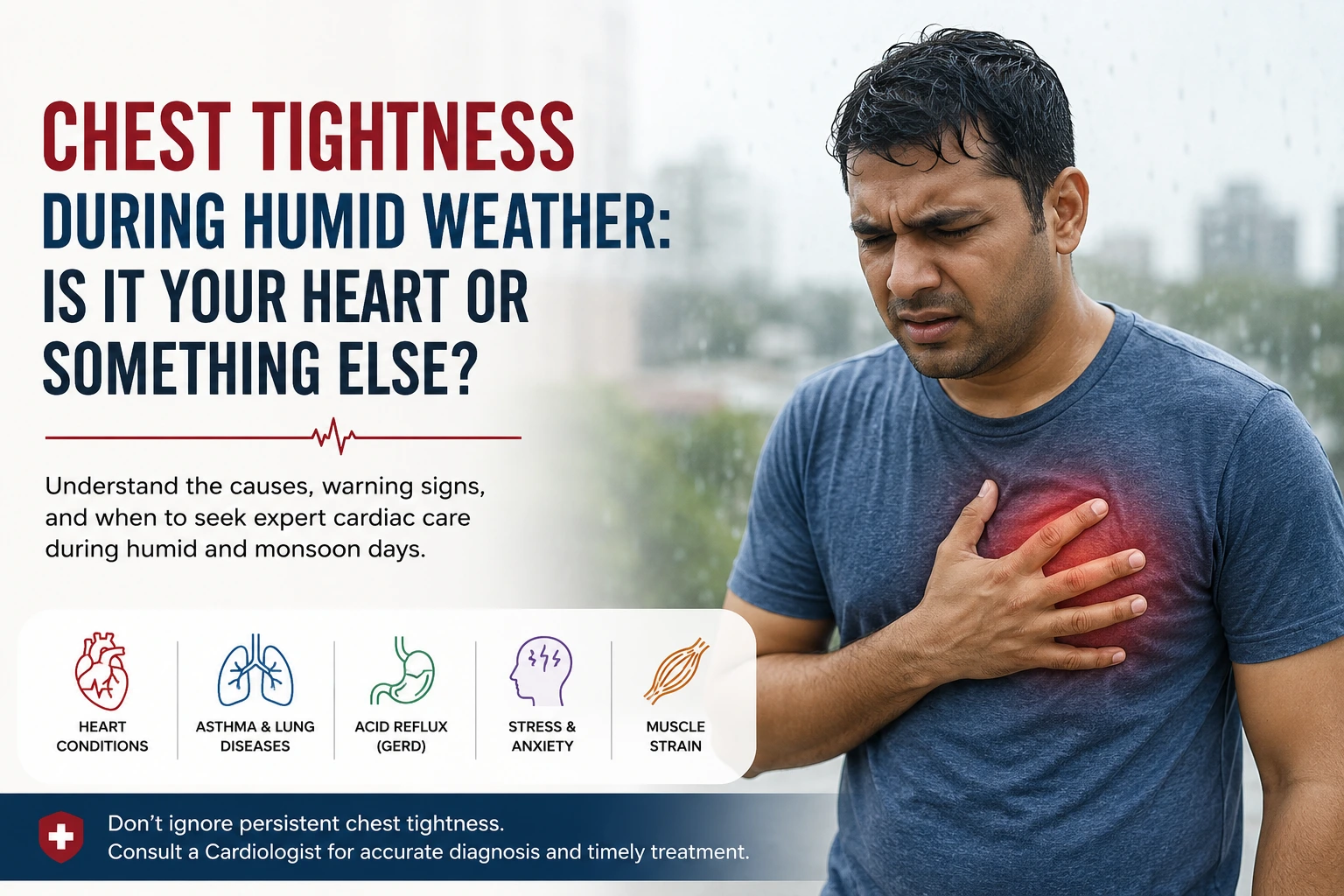
During the monsoon and humid summer months, many people experience chest tightness, breathlessness, unusual fatigue, or a feeling of heaviness in the chest. While these symptoms are often blamed on the weather, they should never be ignored.
Humidity can increase the workload on your heart and lungs, making existing medical conditions worse. In some cases, chest discomfort may indicate an underlying heart condition, respiratory disease, or digestive problem such as acid reflux.
At Kolekar Hospital, Chembur, our Cardiology Department frequently evaluates patients experiencing chest pain or tightness during seasonal weather changes. Early diagnosis helps determine the exact cause and prevents serious complications.
Why Does Chest Tightness Increase During Humid Weather?
High humidity reduces the body’s ability to cool itself because sweat evaporates more slowly. As body temperature rises, your heart pumps harder to maintain circulation, while your lungs work harder to provide adequate oxygen.
This increased workload may lead to:
- Chest tightness
- Breathlessness
- Fatigue
- Increased heart rate
- Excessive sweating
People with the following conditions are at a higher risk:
- Heart disease
- High blood pressure
- Diabetes
- Asthma
- COPD
- Obesity
- Elderly individuals
Humidity can also contribute to dehydration, further increasing strain on the cardiovascular system.
Common Causes of Chest Tightness
Chest tightness has several possible causes, and not all are related to the heart.
Heart-Related Conditions
Reduced blood flow to the heart due to blocked arteries may cause chest pressure or pain, particularly during physical activity in hot and humid weather.
Internal Link: Cardiology Department
Asthma and Lung Diseases
Humidity may trigger airway inflammation and worsen respiratory conditions.
Common symptoms include:
- Wheezing
- Shortness of breath
- Chest tightness
- Persistent cough
Acid Reflux (GERD)
Acid reflux often causes a burning sensation in the chest that resembles heart pain.
Symptoms usually occur:
- After eating heavy meals
- After spicy or oily foods
- While lying down
Internal Link: Gastroenterology Department
Anxiety and Panic Attacks
Stress and anxiety can produce symptoms similar to heart disease, including:
- Chest tightness
- Rapid heartbeat
- Sweating
- Dizziness
- Difficulty breathing
Muscle Strain
Chest muscles may become strained due to:
- Heavy lifting
- Excessive coughing
- Physical injury
Pain generally increases with movement or when pressing the affected area.
Symptoms You Should Never Ignore
Seek immediate medical attention if chest tightness occurs with:
- Severe chest pain
- Pain spreading to the left arm, jaw, neck, or back
- Difficulty breathing
- Cold sweats
- Dizziness or fainting
- Nausea or vomiting
- Sudden weakness
These may indicate a heart attack and require emergency treatment.
Internal Link: Emergency & ICCU Department
Is Chest Tightness Always a Heart Problem?
Not necessarily.
Heart-related chest pain usually feels like pressure, heaviness, or squeezing and often worsens during physical activity.
Other conditions have different characteristics:
| Condition | Common Symptoms |
|---|---|
| Heart Disease | Pressure, heaviness, pain radiating to arm or jaw |
| Asthma | Wheezing, breathlessness |
| Acid Reflux | Burning sensation after meals |
| Muscle Strain | Pain with movement or touch |
| Anxiety | Chest tightness with rapid heartbeat and sweating |
Because these conditions may overlap, self-diagnosis should be avoided. A medical evaluation is the safest way to identify the cause.
When Should You See a Cardiologist?
Consult a cardiologist if you experience:
- Recurrent chest tightness
- Chest discomfort during exercise
- Breathlessness while walking
- High blood pressure with chest pain
- Diabetes with recurring chest discomfort
- Irregular heartbeat or palpitations
- Family history of heart disease
At Kolekar Hospital, advanced cardiac investigations help detect heart conditions early.
Internal Links: ECG | 2D Echo | Cardiology Department
How Is Chest Tightness Diagnosed?
Your doctor will review your symptoms, medical history, and perform a physical examination before recommending investigations such as:
- ECG
- 2D Echocardiography
- Blood Tests
- Chest X-ray
- CT Scan
- Treadmill Test (TMT)
If required, specialists from Gastroenterology or Pulmonology may also evaluate your condition.
Internal Links:
- CT Scan
- Cardiology
- Gastroenterology
- Emergency & ICCU
How Can Chest Tightness Be Treated?
Treatment depends entirely on the underlying cause.
Heart-related conditions may require:
- Medications
- Lifestyle modifications
- Cardiac procedures when necessary
Respiratory conditions are treated using inhalers and allergy management, while acid reflux is managed through medications and dietary changes.
Tips to Prevent Chest Tightness During Humid Weather
- Stay well hydrated
- Avoid outdoor activities during peak afternoon heat
- Eat light, balanced meals
- Keep blood pressure and diabetes under control
- Quit smoking
- Exercise regularly in cooler hours
- Manage stress through relaxation techniques
- Take prescribed medications consistently
Frequently Asked Questions
Can humid weather cause chest tightness?
Yes. High humidity can increase strain on the heart and lungs, making breathing more difficult and worsening existing medical conditions.
Is chest tightness always a heart problem?
No. It may result from asthma, acid reflux, anxiety, or muscle strain. However, persistent symptoms should always be evaluated by a doctor.
When should I visit the emergency department?
Seek immediate medical attention if chest tightness is accompanied by severe chest pain, breathlessness, sweating, dizziness, or pain spreading to the arm or jaw.
Which department should I consult first?
If you’re unsure of the cause, consult the General Medicine or Cardiology Department at Kolekar Hospital for a comprehensive evaluation.
Can dehydration worsen chest discomfort?
Yes. Dehydration during hot and humid weather increases the workload on the heart and may contribute to chest discomfort, fatigue, and dizziness.
Conclusion
Chest tightness during humid weather should never be ignored, especially if it is recurrent or accompanied by breathlessness, dizziness, or chest pain. While humidity itself can worsen existing health conditions, it may also uncover underlying heart or lung diseases that require prompt medical attention.
Early diagnosis and timely treatment can help prevent serious complications and improve your overall heart health.
Get Expert Cardiac Care at Kolekar Hospital
If you or your loved one experiences chest tightness, chest pain, breathlessness, or recurring discomfort, consult the experienced cardiologists at Kolekar Hospital, Chembur.
Our Cardiology Department offers:
- Comprehensive heart evaluations
- ECG & 2D Echo
- Emergency cardiac care
- Advanced diagnostic facilities
- Personalized treatment plans
Book your consultation today for timely diagnosis and expert cardiac care.