
Cardiology

When Is Angioplasty Needed? Symptoms, Indications and Treatment Options

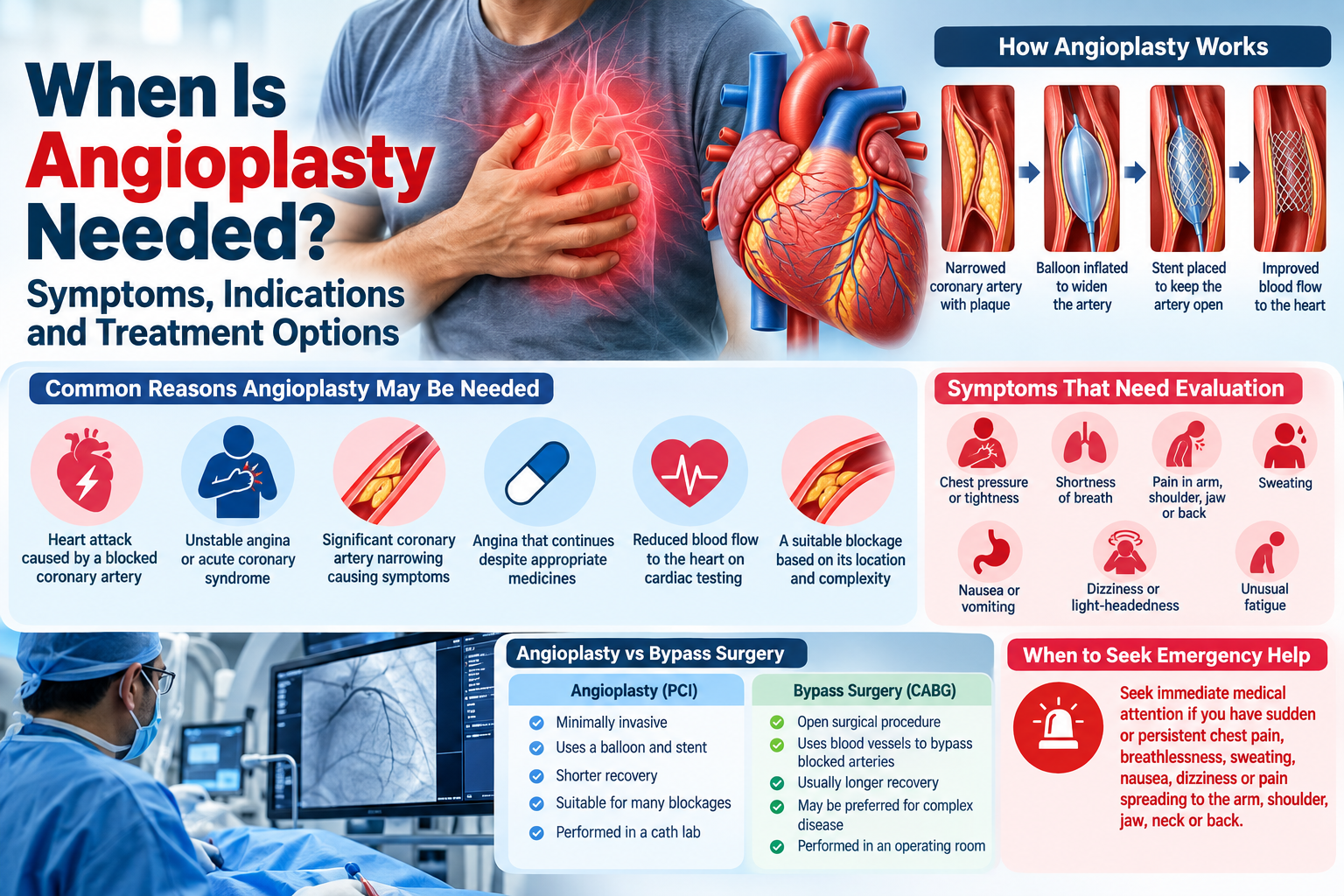
Angioplasty is a minimally invasive procedure used to improve blood flow through narrowed or blocked coronary arteries. It is commonly performed when fatty deposits, blood clots or other blockages reduce the supply of oxygen-rich blood to the heart muscle. During coronary angioplasty, a catheter is guided into the affected artery, usually with a small balloon used to widen the narrowed area. A stent is often placed to help keep the artery open.

If you have been diagnosed with coronary artery disease or have been advised to undergo angioplasty, you may wonder, “When is angioplasty needed?” The answer depends on several factors, including your symptoms, the severity and location of the blockage, whether you are having a heart attack, how well your symptoms respond to medicines, and your overall heart health.

Angioplasty is not automatically required for every person with a blocked or narrowed artery. A cardiologist evaluates the individual situation and considers medicines, lifestyle changes, angioplasty, stenting, or bypass surgery depending on the patient’s condition.

What Is Angioplasty?

Coronary angioplasty, also called percutaneous coronary intervention (PCI), is a procedure used to open a narrowed or blocked coronary artery.

The coronary arteries supply blood and oxygen to the heart muscle. Over time, plaque made up of cholesterol, fats and other substances can build up inside these arteries. This process, known as atherosclerosis, can narrow the arteries and reduce blood flow.

During angioplasty, a thin catheter is inserted through a blood vessel and guided toward the affected coronary artery. A small balloon at the tip of the catheter is inflated at the narrowed area to improve the opening. In most modern procedures, a stent is then placed to help maintain blood flow through the artery.

When Is Angioplasty Needed?

There is no single blockage percentage or symptom that automatically means angioplasty is necessary. The decision depends on the patient’s clinical condition and coronary anatomy.

Angioplasty may be considered in situations such as:

  • A heart attack caused by a blocked coronary artery
  • Unstable angina or acute coronary syndrome
  • Significant coronary artery narrowing causing troublesome symptoms
  • Angina that continues despite appropriate medicines
  • Reduced blood flow to the heart demonstrated by cardiac testing
  • A coronary blockage that is suitable for PCI based on its location and complexity

For stable coronary artery disease, treatment decisions are individualised. Some patients can manage their symptoms effectively with medication and lifestyle changes, while others may benefit from revascularisation. The choice between PCI, bypass surgery and medical treatment depends on factors such as symptoms, anatomy, disease complexity and overall health.

1. Angioplasty During a Heart Attack

One of the most important situations in which angioplasty may be needed is an acute heart attack.

A heart attack occurs when blood flow through a coronary artery is suddenly reduced or blocked, depriving part of the heart muscle of oxygen. In an appropriate patient, urgent PCI can reopen the affected artery and restore blood flow.

For certain heart attacks, particularly STEMI, primary PCI is an important emergency treatment when it can be performed promptly by an appropriate medical team.

Symptoms of a heart attack can include:

  • Chest pressure, tightness or discomfort
  • Pain or discomfort in the arm or shoulder
  • Pain spreading to the jaw, neck or back
  • Shortness of breath
  • Sweating
  • Nausea or vomiting
  • Light-headedness
  • Unusual weakness or fatigue

Women may also experience symptoms such as upper-back pressure, nausea, shortness of breath and unusual tiredness.

If these symptoms occur suddenly, seek emergency medical attention rather than waiting for them to disappear.

2. Angioplasty for Unstable Angina

Another important indication is unstable angina.

Unlike stable angina, which commonly occurs with physical activity and improves with rest, unstable angina may occur unexpectedly, including during rest. It can indicate a significant reduction in blood flow to the heart and may progress to a heart attack.

Depending on the results of the clinical assessment, ECG, blood tests and coronary angiography, treatment may include medicines, angioplasty with stenting, or coronary artery bypass surgery.

New, worsening or persistent chest discomfort should be treated as a medical emergency.

3. Angina That Does Not Improve With Medicines

People with stable angina are often initially treated with medicines and lifestyle changes. Medicines may include drugs that reduce the heart’s workload, improve blood flow, control cholesterol or reduce the risk of blood clots.

If angina continues despite appropriate medical treatment, a cardiologist may consider revascularisation, which can include angioplasty or bypass surgery depending on the coronary anatomy.

The purpose may be to improve blood flow and reduce symptoms that are limiting everyday activities. Angioplasty can decrease angina and improve the ability to perform physical activity when symptoms are caused by a suitable coronary blockage.

4. Significant Narrowing of a Coronary Artery

A coronary artery may become significantly narrowed because of plaque buildup. If the narrowing is affecting blood flow and is responsible for symptoms or evidence of myocardial ischaemia, angioplasty may be considered.

However, the decision is not based only on the percentage of narrowing seen on an angiogram. Doctors also consider:

  • Location of the blockage
  • Length and complexity of the lesion
  • Number of affected arteries
  • Symptoms
  • Results of other heart tests
  • Heart pumping function
  • Presence of diabetes or kidney disease
  • Previous heart procedures
  • Overall surgical and procedural risk

For complex coronary artery disease, a Heart Team may be involved in deciding whether PCI, bypass surgery or another treatment strategy is appropriate.

5. Evidence of Reduced Blood Flow to the Heart

Some people may have coronary artery narrowing without obvious chest pain. Doctors may identify reduced blood flow through tests such as a stress test or other cardiac imaging.

When test results indicate that a coronary blockage is clinically important, the cardiologist may discuss treatment options. Depending on the findings, treatment could include medication and lifestyle changes, angioplasty, or bypass surgery.

The goal is not simply to treat an image showing a blockage but to determine whether opening that artery is likely to benefit the patient.

Symptoms That May Indicate a Need for Cardiac Evaluation

Not every person who experiences chest discomfort needs angioplasty. However, symptoms suggestive of reduced blood flow to the heart should be evaluated.

Possible symptoms include:

SymptomWhat it may indicate
Chest pressure or tightnessPossible angina or another cardiac condition
BreathlessnessMay occur with reduced cardiac blood flow
Pain spreading to arm or shoulderPossible cardiac symptom
Jaw, neck or back discomfortCan occur with angina or heart attack
SweatingMay accompany acute coronary syndrome
Nausea or vomitingCan occur during a heart attack
Dizziness or light-headednessMay occur with cardiac problems
Unusual fatigueCan accompany heart disease, particularly in some women

These symptoms do not automatically mean that angioplasty is required. They indicate the need for appropriate medical evaluation.

How Do Doctors Decide Whether Angioplasty Is Needed?

Before recommending angioplasty, a cardiologist considers your symptoms, medical history, test results and coronary anatomy.

The evaluation may include:

Electrocardiogram

An ECG records the electrical activity of the heart and can help identify signs of a heart attack or other cardiac problems.

Blood Tests

Blood tests, including cardiac troponin testing when appropriate, can help identify heart muscle injury.

Echocardiogram

An echocardiogram uses ultrasound to assess the structure and pumping function of the heart.

Stress Testing

In selected patients, stress testing can help determine whether physical exertion is associated with reduced blood flow to the heart.

Coronary Angiography

Coronary angiography uses contrast dye and X-ray imaging to visualise the coronary arteries and identify narrowed or blocked areas. It can help doctors determine whether a blockage is suitable for PCI or whether another treatment approach is more appropriate.

Current chest-pain guidance emphasises structured risk assessment and appropriate cardiac testing rather than relying on symptoms alone.

Angioplasty vs Bypass Surgery

Angioplasty and coronary artery bypass grafting (CABG) are both methods of improving blood flow to the heart, but they work differently.

AngioplastyBypass Surgery
Minimally invasive catheter-based procedureOpen surgical procedure
Usually uses a balloon and stentUses blood vessels to create a new route around blocked arteries
Generally involves a shorter recoveryUsually involves a longer recovery
Suitable for many types of coronary blockagesMay be preferred for certain complex or extensive disease
Performed in a cardiac catheterisation laboratoryPerformed in an operating room

The choice between PCI and CABG depends on the patient’s coronary anatomy, disease complexity, symptoms, overall health and other factors. Some patients may benefit more from bypass surgery than angioplasty.

What Happens During Angioplasty?

Angioplasty is performed in a cardiac catheterisation laboratory.

A typical procedure involves:

  1. Preparing the patient and administering local anaesthesia.
  2. Inserting a thin catheter through a blood vessel, commonly in the wrist or sometimes the groin.
  3. Guiding the catheter to the coronary artery.
  4. Injecting contrast dye to identify the blockage.
  5. Positioning a small balloon at the narrowed area.
  6. Inflating the balloon to widen the artery.
  7. Placing a stent when appropriate.
  8. Confirming improved blood flow before completing the procedure.

The exact technique varies depending on the patient’s anatomy and clinical situation.

What Happens After Angioplasty?

After angioplasty, patients are monitored for a period of time. Some people may go home the same day or after a short hospital stay, while those treated during a heart attack or with other medical concerns may need longer hospitalisation.

Medicines are particularly important after stent placement. Depending on the type of stent and the patient’s circumstances, doctors commonly prescribe antiplatelet medicines to reduce the risk of blood clots forming inside the stent.

Patients should take prescribed medicines exactly as directed and should not stop antiplatelet medication without speaking with their cardiologist.

Cardiac rehabilitation, regular physical activity when medically appropriate, a heart-healthy diet, smoking cessation and control of blood pressure, cholesterol and diabetes are also important parts of long-term heart care.

Can Angioplasty Be Avoided?

In some patients, yes. Angioplasty is not necessary for every person with coronary artery disease.

Depending on the patient’s condition, treatment may involve:

  • Heart-healthy lifestyle changes
  • Cholesterol-lowering medicines
  • Blood pressure treatment
  • Antiplatelet medicines
  • Anti-anginal medicines
  • Diabetes management
  • Smoking cessation
  • Regular medical monitoring

For stable angina, medicines and lifestyle measures can often help control symptoms. If symptoms remain troublesome or the clinical situation changes, revascularisation may then be considered.

What Are the Risks of Angioplasty?

Angioplasty is commonly performed, but like any medical procedure, it carries potential risks.

These can include:

  • Bleeding or bruising at the catheter insertion site
  • Damage to a blood vessel
  • Allergic reaction to contrast dye
  • Abnormal heart rhythm
  • Blood clot formation
  • Re-narrowing of the treated artery
  • Heart attack or stroke
  • Kidney-related complications in susceptible patients

The individual risk depends on factors such as age, kidney function, overall health, the urgency of the procedure and the complexity of the coronary disease.

Your cardiologist should explain the expected benefits, risks and alternatives before a planned procedure.

When Should You Seek Emergency Medical Help?

Do not wait for a routine appointment if you develop sudden or persistent chest discomfort, particularly if it is accompanied by shortness of breath, sweating, nausea, dizziness or pain spreading to the arm, shoulder, jaw, neck or back.

Acute chest pain requires prompt medical assessment because it can be caused by a heart attack or another life-threatening condition.

Frequently Asked Questions About Angioplasty

When is angioplasty needed?

Angioplasty may be needed when a coronary artery is significantly narrowed or blocked and restoring blood flow is clinically appropriate. It is commonly used during certain heart attacks and may also be considered for unstable angina or persistent symptoms caused by suitable coronary artery disease.

Is angioplasty required for every blockage?

No. The presence of a blockage does not automatically mean that angioplasty is necessary. Doctors consider symptoms, blood-flow impairment, coronary anatomy, disease complexity and overall health before recommending treatment.

Is angioplasty the same as stent placement?

Not exactly. Angioplasty uses a balloon to widen a narrowed artery, while a stent is a small mesh tube placed inside the artery to help keep it open. In modern coronary PCI, angioplasty and stenting are commonly performed together.

How long does angioplasty take?

The procedure can vary in duration depending on the number and complexity of blockages and whether it is being performed as an emergency. Some procedures may take around 30 minutes, while more complex cases can take longer.

Can a person live normally after angioplasty?

Many people return to normal activities after recovery, but angioplasty does not remove the underlying tendency to develop coronary artery disease. Long-term medicines, follow-up care and heart-healthy lifestyle changes remain important.

Conclusion

Understanding when angioplasty is needed can help patients make informed decisions about their heart health. Angioplasty may be used to restore blood flow when a coronary artery is significantly narrowed or blocked, particularly during certain heart attacks and in selected patients with angina or other forms of coronary artery disease.

However, angioplasty is not automatically required for every blockage. A cardiologist considers the patient’s symptoms, test results, coronary anatomy, disease complexity and overall health before recommending PCI, medication, bypass surgery or another treatment approach.

If you experience sudden or persistent chest pressure, breathlessness, sweating, nausea, dizziness or pain spreading to the arm, shoulder, jaw, neck or back, seek emergency medical attention immediately. Early assessment and appropriate treatment can be critical when acute coronary syndrome or a heart attack is suspected.

Medical Disclaimer: This article is intended for general educational purposes only and should not replace professional medical advice, diagnosis or treatment. The decision to undergo angioplasty should be made after evaluation by a qualified cardiologist based on the individual patient’s clinical condition and test results.

Contact Details:

Kolekar Hospital & ICCU

Multispeciality Hospital in Chembur

Address: 2nd Floor, Omprakash Arcade, Approach to Ambedkar Garden Bus Stop Chembur Gaothan, Chembur 2nd & 3rd floor Omprakash Arcade, at Ambedkar garden, Chembur, Mumbai, Maharashtra 400071 

Phone: 02235083100

Website: kolekarhospital.com

Loading

Health

What Are the First Signs of Kidney Stones? Symptoms, Causes and Treatment

Kidney stones are hard, crystal-like deposits that develop inside the kidneys when certain minerals and salts become concentrated in the urine. They can vary in size, from tiny crystals that pass unnoticed to larger stones that can block the urinary tract and cause significant pain.

If you are wondering what are the first signs of kidney stones, one of the most common symptoms is pain in the back or side. However, kidney stones can cause several other symptoms, including changes in urination, blood in the urine, painful urination, nausea, vomiting and pain that moves toward the lower abdomen or groin.

Some kidney stones do not cause symptoms at all, particularly when they remain inside the kidney. Symptoms often begin when a stone moves into the ureter, the narrow tube that carries urine from the kidney to the bladder.

Recognising the early signs of kidney stones can help you seek medical attention before complications develop.

What Are the First Signs of Kidney Stones?

The first signs of kidney stones can vary depending on the size and location of the stone. A small stone may pass without causing noticeable symptoms, while a stone that becomes stuck in the ureter can cause sudden and severe discomfort.

Some of the early signs include:

  • Sharp pain in the side or back
  • Pain below the ribs
  • Pain that moves toward the lower abdomen or groin
  • Pain that comes and goes in waves
  • Blood in the urine
  • Burning or pain while urinating
  • Frequent urination
  • An urgent need to urinate
  • Nausea or vomiting
  • Cloudy or foul-smelling urine

It is important to remember that these symptoms can also occur with urinary tract infections and other conditions. Therefore, symptoms alone cannot confirm that you have a kidney stone.

1. Sharp Pain in the Back or Side

Pain is one of the most commonly recognised first signs of kidney stones. It usually occurs in the side or back, below the ribs, and may affect only one side of the body.

Kidney stone pain can be sudden and intense. It may also come in waves, becoming stronger and then temporarily improving.

As the stone moves through the urinary tract, the location of the pain may change. It can travel from the back or side toward the lower abdomen, pelvis or groin.

Unlike ordinary muscle pain, kidney stone pain may be difficult to relieve by changing your position. However, the severity and pattern can differ from person to person.

2. Pain That Moves Towards the Groin

A kidney stone travels from the kidney through the ureter toward the bladder. Because of this movement, the location of the pain can change.

Initially, you may feel pain in the side or back. As the stone moves downward, the discomfort may spread toward:

  • The lower abdomen
  • Pelvic region
  • Groin
  • Upper thigh

This changing pain pattern can be an important clue, especially when it occurs together with urinary symptoms.

3. Blood in the Urine

Another possible early sign of kidney stones is blood in the urine, medically known as hematuria.

The urine may appear:

  • Pink
  • Red
  • Brown
  • Tea-coloured

In some cases, the amount of blood may be too small to see with the naked eye and may only be detected during a urine test.

A stone can irritate the lining of the urinary tract as it moves, which may result in bleeding. However, blood in the urine can also be caused by urinary infections, kidney conditions and other medical problems. It should therefore be medically evaluated rather than automatically attributed to kidney stones.

4. Burning or Pain During Urination

As a kidney stone moves closer to the bladder, it can cause discomfort during urination.

You may experience:

  • Burning while passing urine
  • Sharp pain during urination
  • Pressure in the lower abdomen
  • Discomfort around the bladder or groin

Painful urination can also be caused by a urinary tract infection. If it occurs with fever, chills, cloudy urine or a strong urine odour, medical evaluation becomes particularly important.

5. Frequent or Urgent Urination

A kidney stone near the lower part of the urinary tract can make you feel that you need to urinate more frequently.

You may notice:

  • A frequent need to use the bathroom
  • A sudden or urgent need to urinate
  • Passing only a small amount of urine
  • Discomfort before or during urination

These symptoms can sometimes be mistaken for a urinary tract infection. A urine test and other investigations may be required to identify the actual cause.

6. Nausea and Vomiting

Kidney stones can cause nausea or vomiting, especially when the pain is severe.

The urinary system and digestive system are connected through shared nerve pathways. Intense pain caused by a stone can therefore trigger nausea or vomiting.

Nausea becomes more concerning when it is accompanied by:

  • Severe or persistent pain
  • Fever
  • Chills
  • Difficulty passing urine
  • Signs of dehydration

Repeated vomiting can also make it difficult to maintain adequate fluid intake, which may worsen dehydration.

7. Cloudy or Foul-Smelling Urine

Changes in the appearance or smell of urine can sometimes occur in people with kidney stones.

Urine may become cloudy or develop an unusually strong or unpleasant smell. However, these symptoms are also common with urinary tract infections.

If changes in urine occur along with fever, chills, pain or difficulty urinating, it is important to seek medical attention promptly.

8. Difficulty Passing Urine

A larger stone can become lodged in the urinary tract and interfere with the normal flow of urine.

You may notice that:

  • Urine flow becomes weaker
  • Only a small amount of urine is passed
  • You have difficulty starting urination
  • You feel unable to empty your bladder completely

Complete inability to pass urine can indicate a significant obstruction and requires urgent medical assessment.

Kidney Stone Symptoms at a Glance

SymptomWhat You May Experience
Back or side painSharp or severe pain below the ribs
Pain moving downwardDiscomfort spreading towards the abdomen or groin
Blood in urinePink, red or brown urine
Painful urinationBurning or discomfort while urinating
Frequent urinationNeeding to urinate more often
Urgent urinationSudden or persistent urge to urinate
NauseaFeeling sick, particularly with severe pain
VomitingMay occur during intense pain
Cloudy urineUrine appears less clear
Foul-smelling urineStrong or unusual urine odour
Fever or chillsMay indicate an associated infection
Difficulty urinatingReduced urine flow or inability to urinate

These symptoms are not exclusive to kidney stones, so proper medical evaluation is important.

Why Do Kidney Stones Form?

Kidney stones develop when certain substances in urine become highly concentrated and form crystals. These crystals can gradually combine and grow into stones.

Several factors can increase the likelihood of developing kidney stones, including:

  • Not drinking enough water
  • Excessive salt intake
  • A diet high in certain animal proteins
  • Obesity
  • A family history of kidney stones
  • Previous kidney stones
  • Certain digestive disorders
  • Recurrent urinary infections
  • Certain metabolic conditions
  • Some medications and supplements

There are different types of kidney stones, including calcium stones, uric acid stones, struvite stones and cystine stones. Identifying the type of stone can help doctors recommend appropriate preventive measures.

Can Kidney Stones Cause No Symptoms?

Yes. Kidney stones do not always cause noticeable symptoms.

A small stone may remain inside the kidney without causing pain. Some small stones may also pass through the urinary tract without the person realising it.

Symptoms are more likely when a stone moves into the ureter, becomes lodged, or interferes with the normal flow of urine.

Therefore, the absence of pain does not always mean that kidney stones are not present.

When Should You See a Doctor for Kidney Stones?

If you experience unexplained pain in your side or back, blood in your urine, painful urination or recurring urinary symptoms, it is advisable to consult a healthcare professional.

You should seek urgent medical attention if you experience:

  • Severe or unbearable pain
  • Fever or chills
  • Persistent vomiting
  • Blood in the urine
  • Difficulty passing urine
  • Inability to urinate
  • Severe pain that does not improve

Fever and chills are particularly important because they may indicate an infection. An infection occurring alongside urinary blockage can become serious and requires prompt treatment.

How Are Kidney Stones Diagnosed?

A doctor may diagnose kidney stones based on your symptoms, medical history, physical examination and diagnostic tests.

Depending on your symptoms, investigations may include:

Urine Tests

A urine test can identify blood, signs of infection and certain substances that may contribute to stone formation.

Blood Tests

Blood tests can help evaluate kidney function and check levels of substances such as calcium and uric acid.

Imaging Tests

Imaging can help determine whether a stone is present and identify its size and location. Depending on the patient’s age, symptoms and clinical condition, a doctor may recommend an ultrasound, CT scan or another appropriate imaging test.

How Are Kidney Stones Treated?

Treatment depends on several factors, including the size and location of the stone, whether it is causing an obstruction, and whether an infection is present.

Small kidney stones may sometimes pass naturally. Doctors may recommend adequate fluid intake, pain management and monitoring, depending on the individual situation.

For larger stones or stones that do not pass naturally, treatment may include procedures such as:

  • Shock wave lithotripsy
  • Ureteroscopy
  • Other minimally invasive stone removal procedures
  • Surgical treatment in selected cases

A urologist can determine the most suitable treatment based on the individual patient’s condition.

How Can Kidney Stones Be Prevented?

Drinking enough water is one of the most important measures for reducing the risk of kidney stones. Adequate hydration helps dilute substances in the urine that can form crystals.

Other preventive measures may include:

  • Drinking sufficient water throughout the day
  • Reducing excessive salt intake
  • Maintaining a balanced diet
  • Maintaining a healthy body weight
  • Following medical advice regarding dietary calcium and oxalate
  • Managing conditions that increase stone risk
  • Following prescribed preventive medicines when required

If you have had kidney stones previously, your doctor may recommend additional tests to determine why they formed and how future stones can be prevented.

Frequently Asked Questions About Kidney Stones

What are the first signs of kidney stones?

The first signs of kidney stones can include sharp pain in the side or back, pain that moves towards the lower abdomen or groin, blood in the urine, painful urination, frequent urination, nausea and vomiting. Some people may have no symptoms until the stone moves into the ureter.

Where does kidney stone pain usually start?

Kidney stone pain commonly starts in the side or back below the ribs. As the stone moves through the urinary tract, the pain may travel towards the lower abdomen or groin.

Can kidney stones cause blood in urine?

Yes. A kidney stone can irritate the urinary tract and cause blood in the urine. The urine may appear pink, red or brown, although blood may sometimes only be detected through laboratory testing.

Can kidney stones cause frequent urination?

Yes. A stone, particularly one that has moved closer to the bladder, may cause a frequent or urgent need to urinate.

Can kidney stones go away on their own?

Some smaller kidney stones can pass naturally without a procedure. Whether a stone will pass depends on factors such as its size and location. A doctor can determine whether monitoring is appropriate or whether treatment is necessary.

Are kidney stones dangerous?

Many kidney stones can be treated successfully, but a stone that blocks urine flow or occurs together with an infection can become a serious medical problem. Prompt medical evaluation is important when severe symptoms occur.

Conclusion

Knowing what are the first signs of kidney stones can help you recognise symptoms and seek medical attention at the right time. Sharp pain in the side or back, pain that moves towards the lower abdomen or groin, blood in the urine, painful urination, frequent urination, nausea and vomiting are some of the symptoms that may occur when a kidney stone moves through the urinary tract.

However, these symptoms can also occur with other urinary or abdominal conditions. Severe pain, fever, chills, repeated vomiting or difficulty passing urine should not be ignored.

If you experience symptoms that may indicate kidney stones, consult a qualified healthcare professional for an accurate diagnosis. Early evaluation can help determine the size and location of the stone, identify possible complications and guide appropriate treatment.

Medical Disclaimer: This blog is intended for general educational purposes and should not replace professional medical advice, diagnosis or treatment. If you experience severe pain, fever, chills, persistent vomiting, blood in the urine or difficulty urinating, seek prompt medical attention.

Contact Details:

Kolekar Hospital & ICCU

Multispeciality Hospital in Chembur

Address: 2nd Floor, Omprakash Arcade, Approach to Ambedkar Garden Bus Stop Chembur Gaothan, Chembur 2nd & 3rd floor Omprakash Arcade, at Ambedkar garden, Chembur, Mumbai, Maharashtra 400071 

Phone: 02235083100

Website: kolekarhospital.com

Loading

Cardiology

What Causes Chest Pain in a Woman? Causes, Symptoms and When to Seek Medical Help

Chest pain can be worrying, especially when it occurs suddenly or without an obvious reason. If you are wondering what causes chest pain in a woman, it is important to understand that there can be several possible causes. While chest pain is often associated with heart problems, it can also result from acid reflux, muscle strain, anxiety, lung conditions, hormonal changes, or breast-related problems.

Women may also experience heart-related conditions differently from men. Instead of severe or crushing chest pain, some women may experience shortness of breath, unusual tiredness, nausea, dizziness, sweating, or discomfort in the back, shoulder, arm, neck, or jaw.

Because chest pain can sometimes indicate a medical emergency, it should never be ignored, particularly when it is new, severe, persistent, or accompanied by other concerning symptoms.

What Causes Chest Pain in a Woman?

There is no single answer to what causes chest pain in a woman because chest discomfort can originate from different organs and tissues. The heart, lungs, digestive system, muscles, nerves, and breast tissue can all contribute to pain felt in or around the chest.

Some common causes include:

  • Heart conditions such as angina or heart attack
  • Acid reflux and indigestion
  • Muscle strain or chest-wall inflammation
  • Anxiety and panic attacks
  • Lung infections and other respiratory conditions
  • Inflammation around the heart
  • Breast-related conditions
  • Hormonal changes

The nature of the pain, when it occurs, how long it lasts, and whether it is associated with other symptoms can provide useful information. However, these symptoms alone cannot reliably determine the cause. A healthcare professional may need to perform an examination and appropriate tests.

Heart-Related Causes of Chest Pain in Women

One of the most important causes of chest pain to consider is a problem involving the heart. Conditions such as coronary artery disease, angina, and heart attack can cause chest discomfort.

Angina

Angina occurs when the heart muscle does not receive enough oxygen-rich blood. It may feel like pressure, tightness, squeezing, heaviness, or discomfort in the chest.

The discomfort may sometimes spread to the:

  • Arm or shoulder
  • Back
  • Neck
  • Jaw

Women may experience symptoms such as shortness of breath, nausea, or discomfort in areas other than the chest. Angina may occur during physical activity or emotional stress and may improve with rest, depending on the type.

Heart Attack

A heart attack occurs when blood flow to part of the heart becomes significantly reduced or blocked. It requires immediate medical attention.

Chest pressure or discomfort is an important warning sign, but women may also experience symptoms such as:

  • Shortness of breath
  • Nausea or vomiting
  • Cold sweating
  • Dizziness
  • Unusual tiredness
  • Pain or discomfort in the back, shoulder, arm, neck, or jaw

Some women may have relatively mild symptoms, and symptoms can sometimes develop gradually. This is why unexplained chest discomfort should not automatically be dismissed as acidity, gas, or stress.

Can Acid Reflux Cause Chest Pain in Women?

Yes. Acid reflux and indigestion are common causes of chest discomfort. Gastroesophageal reflux disease (GERD) occurs when stomach contents flow back into the oesophagus, causing irritation.

Acid reflux-related chest discomfort may feel like burning behind the breastbone and may be accompanied by:

  • Heartburn
  • A sour or bitter taste in the mouth
  • Burping
  • Bloating
  • Discomfort after meals

Symptoms may become worse after eating or when lying down.

However, heartburn and heart-related chest pain can sometimes feel similar. Therefore, new or unexplained chest pain should not automatically be assumed to be caused by acidity.

Muscle Strain and Chest Wall Pain

Another possible explanation for chest pain is a problem involving the muscles, ribs, or chest wall.

Muscle-related chest pain can occur after:

  • Exercise or weightlifting
  • Repetitive upper-body movements
  • Coughing for a prolonged period
  • An injury
  • Sudden physical exertion
  • Poor posture

This type of pain may become more noticeable when moving the upper body or touching the affected area.

Although muscle strain is generally less serious than many heart-related causes, it is still important to seek medical advice when the cause of chest pain is uncertain.

Can Anxiety Cause Chest Pain in Women?

Anxiety and panic attacks can cause physical symptoms, including chest discomfort. During a panic attack, a person may experience chest tightness along with rapid heartbeat, sweating, dizziness, trembling, or shortness of breath.

Stress can also cause muscle tension, which may contribute to discomfort around the chest and shoulders.

However, chest pain should not automatically be attributed to anxiety. Heart, lung, and other medical conditions can produce similar symptoms. If the pain is new, severe, persistent, or associated with other warning signs, medical evaluation is important.

Lung Conditions That Can Cause Chest Pain

Certain respiratory conditions can also cause chest pain. Depending on the condition, the pain may become worse when coughing or taking a deep breath.

Possible causes include:

  • Pneumonia
  • Pleurisy
  • Respiratory infections
  • Pulmonary embolism
  • Certain chronic lung conditions

Chest pain associated with a lung problem may occur together with cough, fever, difficulty breathing, or a rapid heartbeat.

A pulmonary embolism, which occurs when a blood clot blocks an artery in the lungs, can be life-threatening. Sudden chest pain combined with significant shortness of breath, rapid heartbeat, coughing up blood, or fainting requires immediate emergency medical attention.

Pericarditis and Other Heart-Related Conditions

Pericarditis is inflammation of the thin sac surrounding the heart. It can cause sharp or stabbing chest pain. The discomfort may become worse with deep breathing, coughing, or lying down.

Other heart-related conditions can also cause chest discomfort, which is why identifying the exact cause requires proper medical assessment.

If chest pain is persistent or accompanied by breathlessness, dizziness, sweating, fainting, or pain spreading to other areas of the body, urgent medical care may be required.

Breast-Related Causes of Chest Discomfort

Sometimes women may describe pain around the chest when the actual source is breast tissue.

Breast pain or tenderness can occur due to:

  • Hormonal changes during the menstrual cycle
  • Pregnancy
  • Breast cysts
  • Breast infections
  • Injury
  • Poor breast support

Breast pain alone is not usually a sign of breast cancer. However, persistent breast pain accompanied by a new lump, skin changes, nipple changes, or unusual discharge should be evaluated by a healthcare professional.

Hormonal Changes and Chest or Breast Pain

Hormonal fluctuations can cause breast tenderness or discomfort in some women. Changes in oestrogen and progesterone levels during the menstrual cycle may make the breasts feel swollen, sensitive, or painful.

Similar symptoms may occur during pregnancy, perimenopause, and menopause.

Even when hormonal changes are suspected, persistent or unusual chest pain should not automatically be considered hormonal. A healthcare professional can determine whether further evaluation is necessary.

Chest Pain in Women: Understanding the Possible Causes

Possible CauseSymptoms or Features
Heart-related conditionsPressure, tightness, heaviness, shortness of breath or discomfort spreading to the upper body
Acid refluxBurning sensation, heartburn, sour taste, discomfort after meals
Muscle strainPain associated with movement, exercise, coughing, or injury
Anxiety or panicChest tightness, rapid heartbeat, sweating, dizziness
Lung conditionsPain with breathing, cough, fever, or shortness of breath
PericarditisSharp chest pain that may worsen with deep breathing or lying down
Breast-related causesLocalised breast tenderness or pain
Hormonal changesBreast tenderness or discomfort related to menstrual or hormonal changes

These symptoms are general patterns and cannot be used to diagnose the cause of chest pain.

Why Chest Pain Symptoms Can Be Different in Women

One important reason women should take chest discomfort seriously is that heart-related symptoms may not always appear in the same way as they are traditionally described.

While chest pressure or discomfort is an important symptom, some women may experience:

  • Unusual or unexplained fatigue
  • Shortness of breath
  • Nausea
  • Dizziness
  • Cold sweating
  • Back or shoulder discomfort
  • Jaw or neck pain
  • Discomfort in one or both arms

These symptoms can occur with or without significant chest pain.

For this reason, women should pay attention to unusual combinations of symptoms, particularly if they develop suddenly or occur during physical activity.

When Should a Woman Seek Emergency Medical Care for Chest Pain?

Chest pain requires urgent medical attention when it is sudden, severe, persistent, or associated with symptoms that could indicate a heart or lung emergency.

Seek emergency medical help if chest pain occurs with:

  • Severe pressure, squeezing, or heaviness
  • Difficulty breathing
  • Cold sweating
  • Nausea or vomiting
  • Fainting or severe dizziness
  • Rapid or irregular heartbeat
  • Pain spreading to the arm, shoulder, back, neck, or jaw
  • Sudden weakness or unusual extreme fatigue

Do not wait for symptoms to become severe before seeking help if you suspect a medical emergency.

How Is Chest Pain Diagnosed?

When you visit a doctor for chest pain, the evaluation may begin with questions about the location, duration, severity, and nature of the pain. Your medical history and risk factors are also important.

Depending on the symptoms, your doctor may recommend tests such as:

  • Electrocardiogram (ECG)
  • Blood tests
  • Blood pressure and oxygen-level measurement
  • Echocardiogram
  • Chest X-ray
  • Stress testing
  • CT scans
  • Coronary angiography

The tests required depend on the suspected cause and whether the symptoms suggest an emergency.

Risk Factors for Heart-Related Chest Pain in Women

Certain health and lifestyle factors can increase the risk of cardiovascular disease. These may include:

  • High blood pressure
  • Diabetes
  • High cholesterol
  • Smoking
  • Obesity
  • Physical inactivity
  • Family history of heart disease
  • Increasing age
  • Certain pregnancy-related health conditions

Regular health check-ups can help identify and manage several of these risk factors.

How Can Women Reduce Their Risk of Heart Disease?

Although not every cause of chest pain can be prevented, maintaining cardiovascular health can help reduce the risk of heart disease.

Helpful measures include:

  • Eating a balanced diet
  • Staying physically active
  • Avoiding smoking and tobacco
  • Maintaining a healthy weight
  • Managing blood pressure and cholesterol
  • Controlling diabetes if present
  • Getting adequate sleep
  • Managing ongoing stress
  • Attending regular health check-ups

Women with known risk factors should discuss appropriate preventive measures with their healthcare provider.

Frequently Asked Questions About Chest Pain in Women

What causes chest pain in a woman most commonly?

Chest pain in women can have several causes, including acid reflux, muscle strain, anxiety, respiratory conditions, breast-related discomfort, and heart-related conditions. The exact cause depends on the individual’s symptoms and health history.

Can gas cause chest pain in women?

Gas and indigestion can cause discomfort in the upper abdomen or chest. However, heart-related pain can sometimes feel similar to indigestion. New or unexplained chest pain should therefore be assessed rather than automatically attributed to gas.

Can stress cause chest pain in women?

Yes. Stress and anxiety can contribute to chest tightness, muscle tension, rapid heartbeat, and other physical symptoms. However, it is important to rule out medical causes when chest pain is new, severe, persistent, or accompanied by concerning symptoms.

Is chest pain always a sign of a heart problem?

No. Chest pain can be caused by digestive, muscular, respiratory, hormonal, breast-related, and other conditions. However, because some heart-related causes can be serious or life-threatening, unexplained chest pain should be taken seriously.

When should chest pain be treated as an emergency?

Seek immediate medical attention if chest pain is severe, persistent, or accompanied by difficulty breathing, sweating, nausea, fainting, dizziness, or discomfort spreading to the arm, shoulder, back, neck, or jaw.

Conclusion

Understanding what causes chest pain in a woman is important because chest discomfort can have many different causes. Acid reflux, muscle strain, anxiety, hormonal changes, breast-related conditions, lung problems, and heart conditions can all produce symptoms in or around the chest.

While some causes may be relatively minor, heart attacks and certain lung conditions can be life-threatening. Women may also experience heart-related problems with symptoms such as unusual fatigue, nausea, shortness of breath, dizziness, sweating, or discomfort in the back, shoulder, arm, neck, or jaw.

Therefore, new, unexplained, severe, or persistent chest pain should not be ignored. If symptoms suggest a medical emergency, seek immediate medical attention. For recurring or unexplained symptoms, consult a qualified healthcare professional for appropriate evaluation and treatment.

Medical Disclaimer: This article is intended for general educational purposes only and should not be considered a substitute for professional medical advice, diagnosis, or treatment. If you are experiencing severe or concerning chest pain, seek emergency medical care immediately.

Contact Details:

Kolekar Hospital & ICCU

Multispeciality Hospital in Chembur

Address: 2nd Floor, Omprakash Arcade, Approach to Ambedkar Garden Bus Stop Chembur Gaothan, Chembur 2nd & 3rd floor Omprakash Arcade, at Ambedkar garden, Chembur, Mumbai, Maharashtra 400071 

Phone: 02235083100

Website: kolekarhospital.com

Loading